
Snow Management
Commercial De-Icing Services in Rochester, NY: How They Work and What to Ask
October 26, 2026 · By CPM Property Services Team
Commercial de-icing services in Rochester, NY treat existing ice on lots and walks with salt or liquid de-icing product to help reduce slip risk. CPM describes treating these surfaces after plowing. Before you hire anyone, ask what product they use, how they cover walks as well as lots, and how treatment changes with conditions. CPM Property Services handles de-icing and ice management for commercial properties in Monroe and Wayne counties.
Quick summary
- Plowing clears snow; de-icing treats what is left, so a commercial snow plan should say how both will be done.
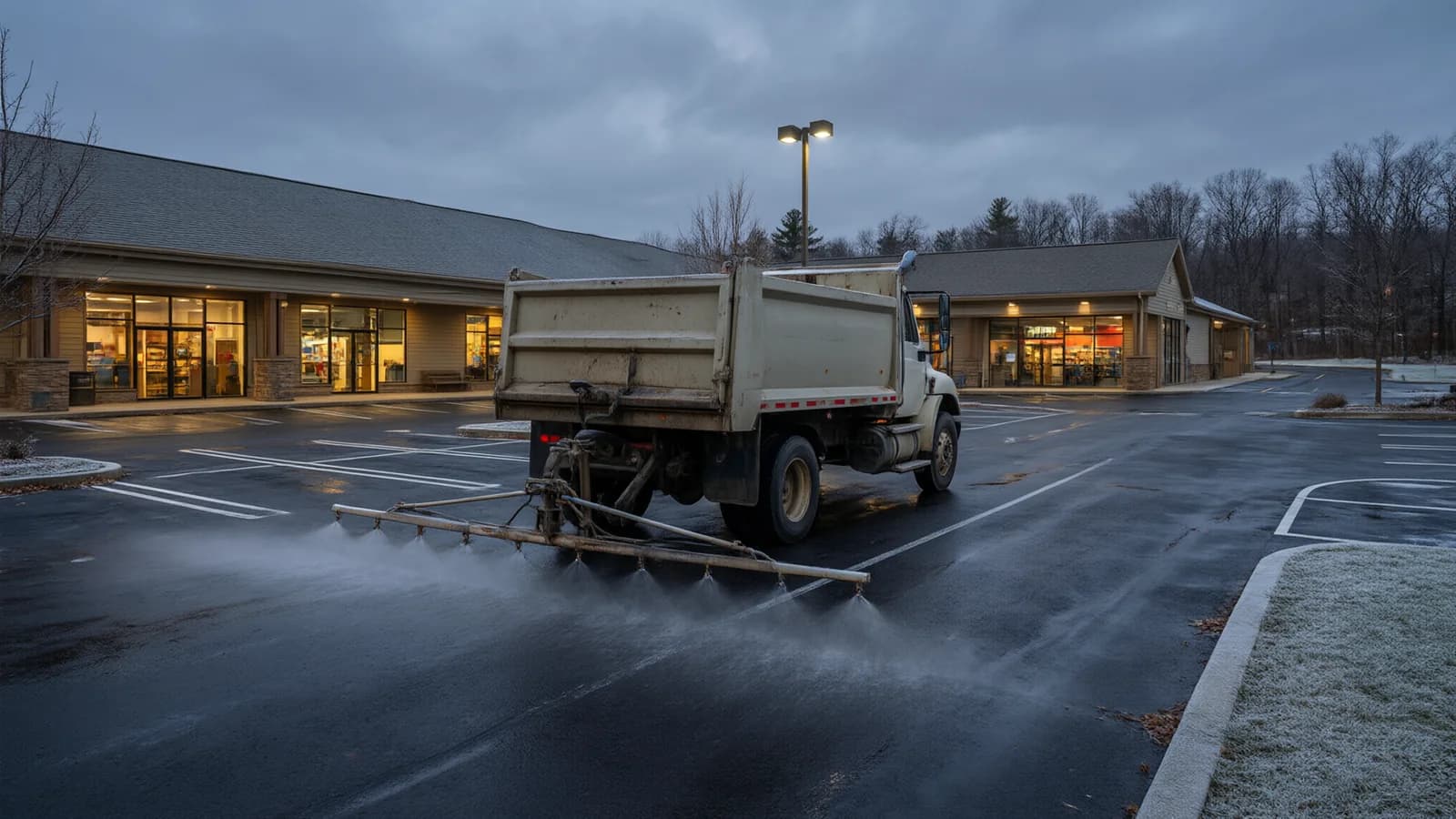
- CPM states that its salt is pre-wetted, and its trucks carry liquid tanks and sprayers for lots. Sidewalk salt dispensers handle walkways.
- Pre-wetting is a recognized practice. A federal highway manual says wetting a solid chemical before spreading can improve its effectiveness in many situations.
- Ask about timing, walks, product on hand and the storm contingency plan before you sign.
- Pricing and per-storm terms are set in a written estimate, not in a blog post.
What do commercial de-icing services do?
Commercial de-icing services apply salt or a liquid de-icing product to parking lots and walkways to reduce existing ice and help manage slip risk for customers, tenants and staff. They are a different job from plowing, even when the same crew does both. Treatment does not guarantee an ice-free surface throughout a storm.
Plowing removes the snow. What remains on the pavement can still be slick, especially when temperatures drop overnight. De-icing is the step that treats that surface. A lot that looks clear can still have ice on it.
CPM describes treatment after plowing. That does not mean every ice-control visit must follow a plow: a refreeze or freezing rain may also call for attention. Ask how the contractor handles those conditions.
How is de-icing different from pre-treatment?
De-icing addresses ice that is already present. Pre-treatment, often called anti-icing, aims to limit bonding before it develops. NYSDOT explains that treating roads before a storm creates brine that reduces ice formation and helps snow come off during plowing. Its explanation is road-maintenance background, not a specification for your parking lot or a claim that CPM includes pre-treatment in every plan.
Ask whether a proposal covers pre-treatment, treatment after plowing, return visits for refreezing, or some combination. Timing and products should suit the pavement and weather; a fixed sequence is not enough on its own.
How does pre-wetted salt work?
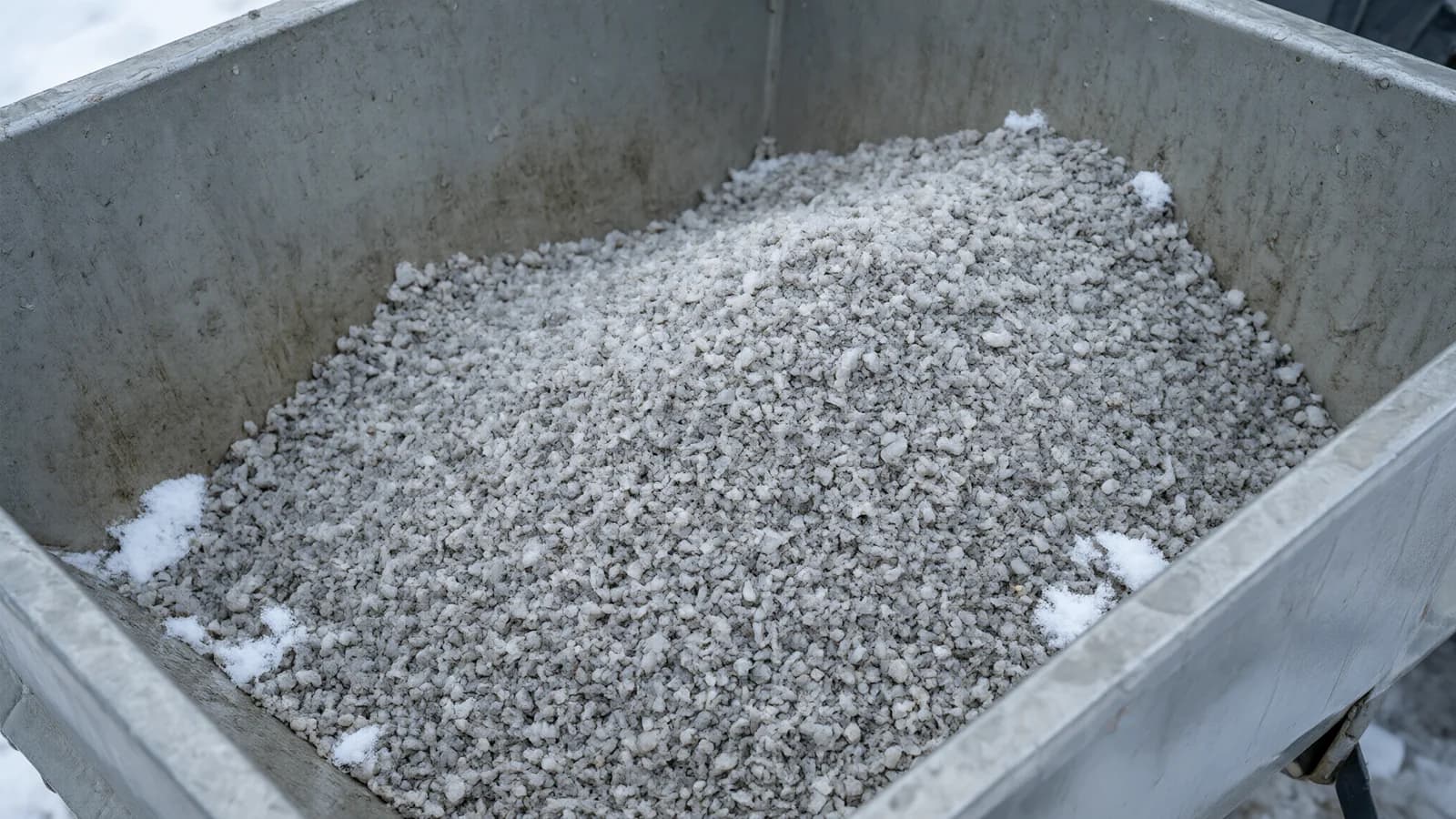
Pre-wetted salt is salt that has been wet with liquid before it is spread. CPM's published method uses pre-wetted salt. The liquid used to wet salt and liquid applied directly to pavement are different application methods; ask which method a proposal includes.
The practice has a long history in highway winter maintenance. The Federal Highway Administration's Manual of Practice for an Effective Anti-icing Program explains that adding liquid can help a solid chemical dissolve and improve performance in some conditions. The manual is a 1996 highway guide, so treat it as background on the idea rather than a specification for a parking lot. Product choice and application rates for your property are decisions for the contractor, based on the site and the conditions on the day.
If a contractor talks about pre-wetting, ask them to explain in plain terms what they use and when. A good answer is specific to your lot, not a general promise.
What equipment should a de-icing contractor have?
A good de-icing crew has equipment for both lots and walkways. CPM states that its dump trucks are fitted with liquid tanks and wide-reaching sprayers that spread liquid de-icing product evenly across a lot. For walkways, it uses sidewalk salt dispensers.
CPM also says it keeps salt and calcium chloride on hand so crews can arrive ready, without waiting on a supplier mid-storm. That is a fair question for any contractor: what is in the truck and what is in storage before the storm arrives?
When you compare contractors, ask these equipment questions:
- How are parking lots treated, and with what equipment?
- How are sidewalks and entrances treated?
- Is product kept in stock, or ordered when a storm is forecast?
- Who is responsible if a walk needs a second pass?
How are walkways handled?
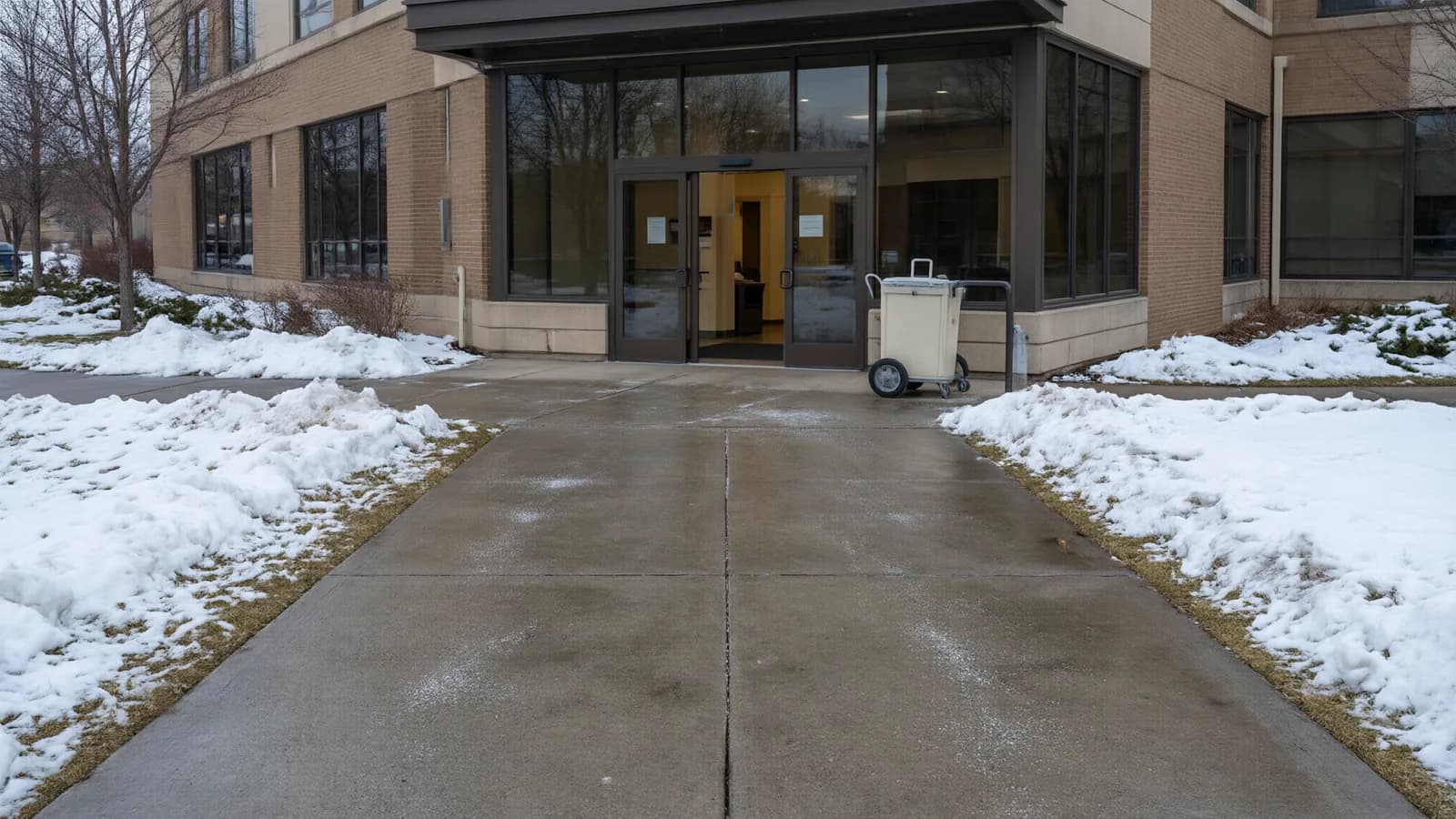
Walkways are treated separately from lots, with different tools. Your customers and tenants walk across them on foot, so a contract that covers only the parking lot leaves a gap.
CPM lists sidewalk clearing as its own service and uses sidewalk salt dispensers to manage ice on walks. When you read a proposal, check that walks, entrances and ramps are named, not assumed. Ask how the contractor chooses products for the surfaces on your property; do not assume every ice-treatment product is suitable for every pavement or planting area.
Request a free de-icing estimate and talk through your lot and walkways with CPM.
What happens in a severe storm?
CPM says it tracks each storm closely so it can position crews and materials ahead of time. Its snow management pages describe contingency and emergency plans for storms of 8 inches or more. Ask how that plan affects your property's ice-treatment visits; this is not a promised arrival time.
For your own property, ask what the written plan says before the season starts. Our guide to commercial snow removal contracts in Rochester covers scope, triggers and billing, so we will not repeat it here. For de-icing specifically, ask:
- What starts a de-icing visit: snowfall, a forecast, or a call from you?
- How soon after plowing are lots and walks treated?
- What happens if freezing rain or a refreeze comes after the visit?
- Who do you call, and at what number, when a spot is slick?
What does de-icing look like on a real route?
Plazas, medical and professional offices, and condo communities can have different ice-treatment priorities. In Penfield, for example, CPM's service page describes plazas along Penfield Road and Empire Boulevard, professional offices and townhome communities, with pre-wetted salt and liquid de-icing among its services. See the Penfield service area page for the full description. CPM also lists commercial properties along the Route 104 corridor on its Webster service area page. These are service-area examples, not accounts of a specific job.
Properties differ, so no two plans are identical. A strip plaza with many entrances needs a different walk plan than a single office building with one door.
When should you set up commercial de-icing?
Set it up before the first storm. A written site plan, an agreed scope and a clear contact number are far easier to arrange in October than in the middle of a storm week.
Frequently Asked Questions
What are commercial de-icing services?
They are the treatment of existing ice on parking lots and walkways with salt or liquid de-icing product to help manage slip risk. Ask whether your commercial snow plan includes both plowing and de-icing, and when return visits are covered.
Does CPM Property Services offer commercial de-icing in Rochester?
Yes. CPM provides de-icing and ice management for commercial properties in Monroe and Wayne counties. You can read about the service on its de-icing and ice management page.
What is pre-wetted salt?
It is salt that has been wet with liquid before it is spread. CPM says it uses pre-wetted salt. Highway guidance explains how adding liquid can help solid chemicals dissolve; the right product and timing still depend on conditions.
Is de-icing included in plowing?
Not automatically. Plowing and de-icing are separate jobs. Ask your contractor to name de-icing for lots and walks in writing so you know exactly what you are getting.
How do I get a commercial de-icing estimate?
Request a free estimate through CPM's quote page, or call the office for your county. A site walk-through lets the team write a plan for your property.
Get your de-icing plan in place before the first storm
Tell CPM about your property and what you need treated. You will get a free, no-pressure estimate for Monroe and Wayne counties.
Get a Free Estimate · Monroe County: (585) 621-8488 · Wayne County: (315) 904-4700
Sources
- New York State Department of Transportation, Why does DOT spread salt before a storm?, read October 26, 2026; road-maintenance background on pre-treatment.
- Federal Highway Administration, Manual of Practice for an Effective Anti-icing Program: A Guide for Highway Winter Maintenance Personnel (FHWA-RD-95-202, June 1996), Section 3.1.3 on prewetting.
- CPM Property Services, De-Icing & Ice Management and Penfield service area, read October 26, 2026.
Related posts
CPM Property Services Team
Landscaping & snow management pros serving Monroe & Wayne county, NY.