Snow Management
Commercial Snow Removal Contracts in Rochester, NY: What to Ask Before You Sign
October 19, 2026 · By CPM Property Services Team
A good commercial snow removal contract in Rochester, NY spells out exactly what gets cleared, when crews show up, how ice is treated and what happens in a major storm. Before you sign, ask for a site walk-through and a written plan for your property, so the commercial snow management you're paying for is the service you actually get.
Quick summary
- A commercial snow contract should list every surface in scope: lots, drives, roadways, sidewalks and entrances.
- Get the service trigger, ice treatment and snow storage plan in writing, not just "we'll plow when it snows."
- Ask what happens in a large storm. CPM's contingency plan covers storms that drop 8 inches or more at one time.
- Know how you're billed and who you call mid-storm before the first flake falls.
- Fall is the time to walk the site, because the plan should be set before the first storm, not during it.
What does a commercial snow removal contract cover?
A commercial snow removal contract is a written agreement that defines which parts of your property a contractor clears and treats each winter, and how. The scope is the most important part, because anything left off the list is easy to dispute in January.
For most commercial sites in Monroe and Wayne County, the scope breaks into four kinds of work:
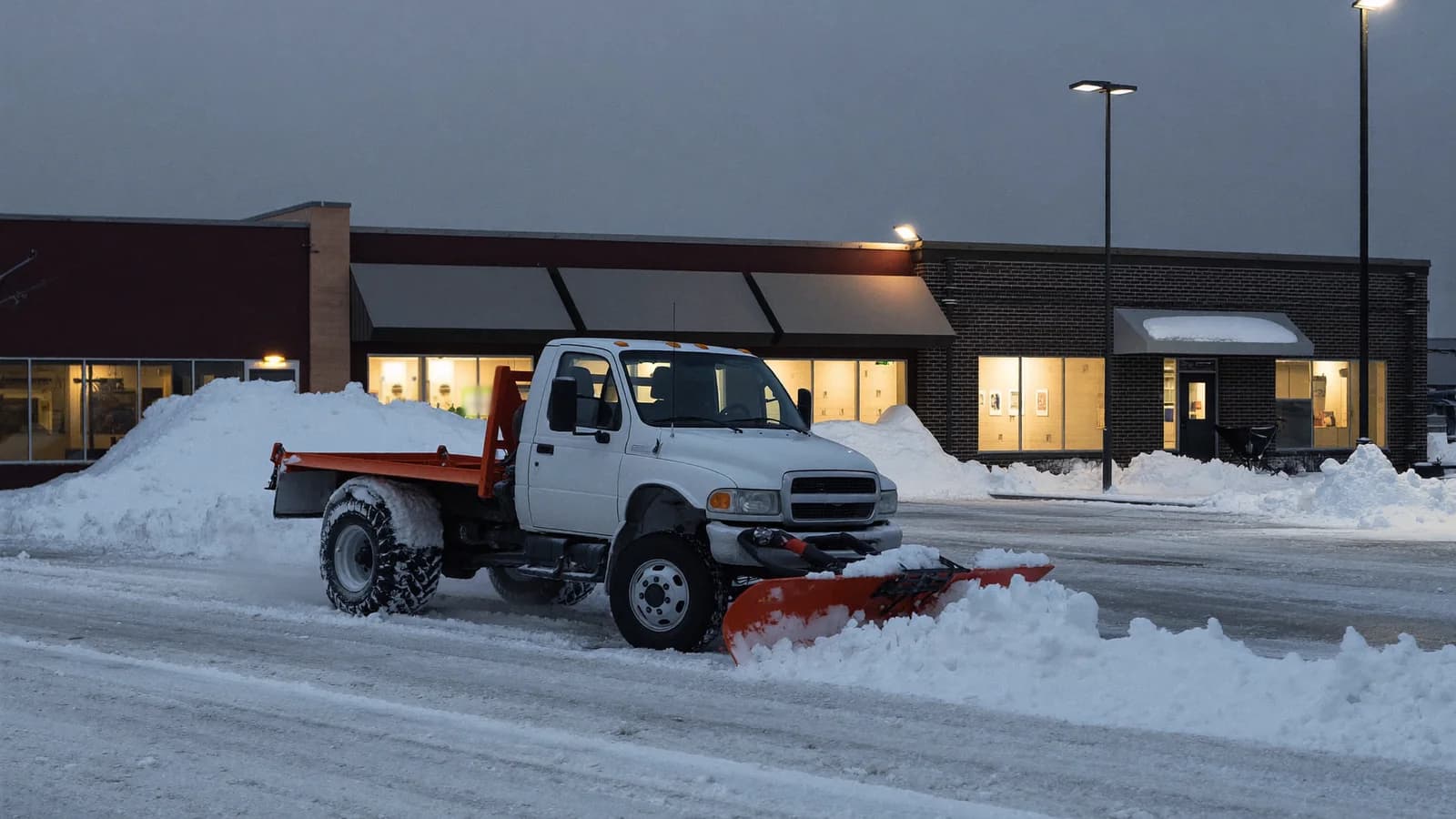
- Plowing: parking lots, drive lanes and private roadways. See our commercial snow plowing service.
- Sidewalk clearing: walks, entrances, ramps and the paths people actually use to reach your door. See sidewalk clearing.
- De-icing: treating lots and walks after plowing so they stay safe. See de-icing and ice management.
- Hauling: moving snow off-site or to another part of the property when there's nowhere left to push it.
A contract that only says "snow plowing" may leave sidewalks, salt or hauling as extras. Ask the contractor to name each surface and each service so you can compare estimates on the same terms.
What should you ask before signing a snow contract?
The most useful questions cover scope, timing, ice, storage, big storms, billing and communication. Each one closes a gap that tends to show up mid-season, when it's hardest to fix.
What exactly is in scope?
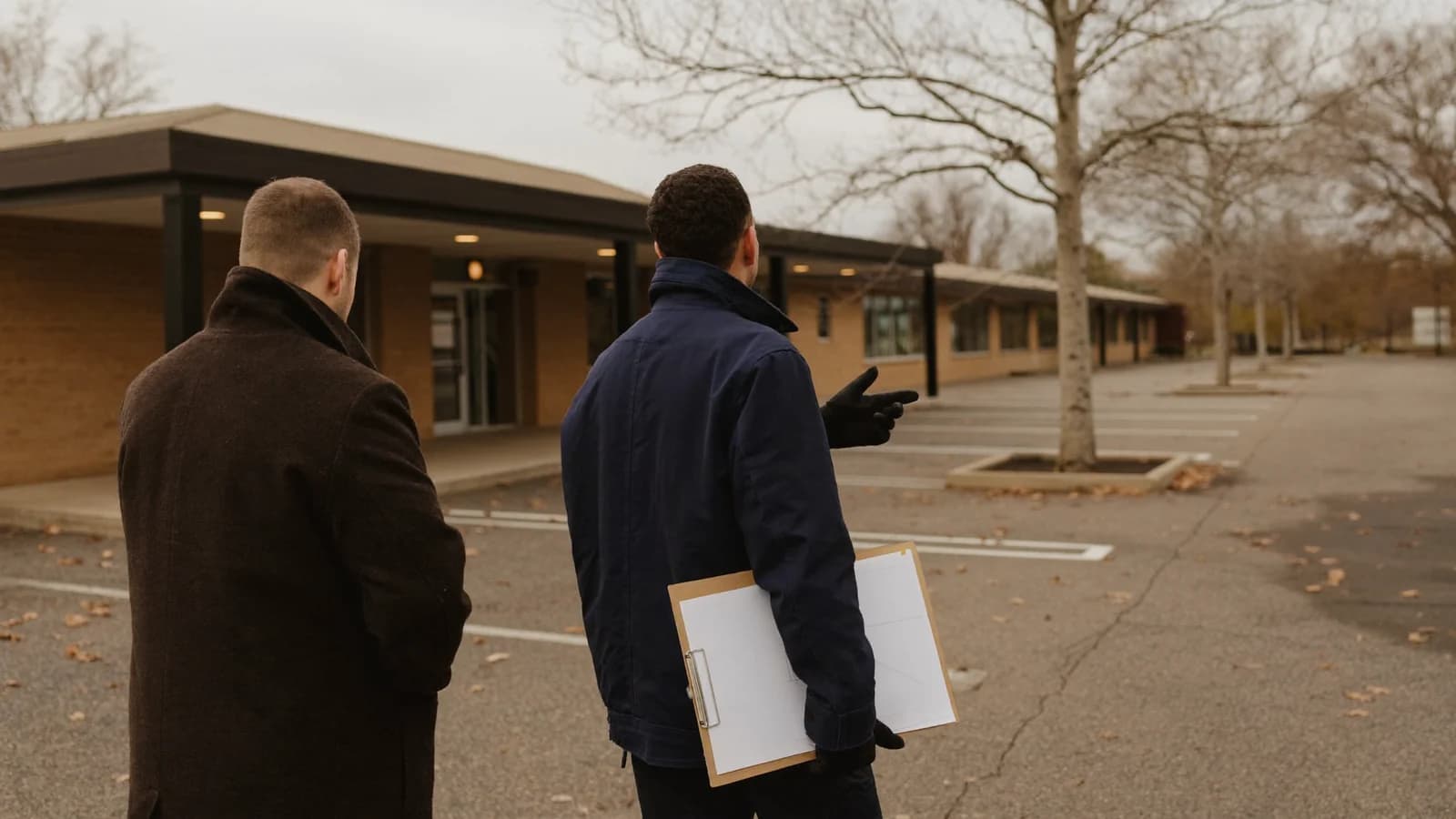
Walk the property with the contractor and point out every area you expect cleared: front lots, back lots, loading areas, fire lanes, dumpster pads, sidewalks and building entrances. Ask that those areas be marked on a site map or listed in the written plan.
If your property has tenants with different hours, say so now. A medical office that opens early and a retail plaza that opens later may need different priorities on the same lot.
What triggers service, and when will crews arrive?
Ask what starts a visit. Some contracts set a snow depth before plowing begins; others call for service whenever snow or ice is present. Neither is right for every property, but you should know which one you're agreeing to.
Ask, too, whether crews aim to have the site clear before your doors open. CPM tracks each storm so crews and materials are positioned ahead of time instead of reacting after the fact.
How will ice be handled?
Plowing removes snow, but ice is what turns a cleared lot into a slip risk. Ask what the contractor uses, where it's applied and whether walks get the same attention as the lot.
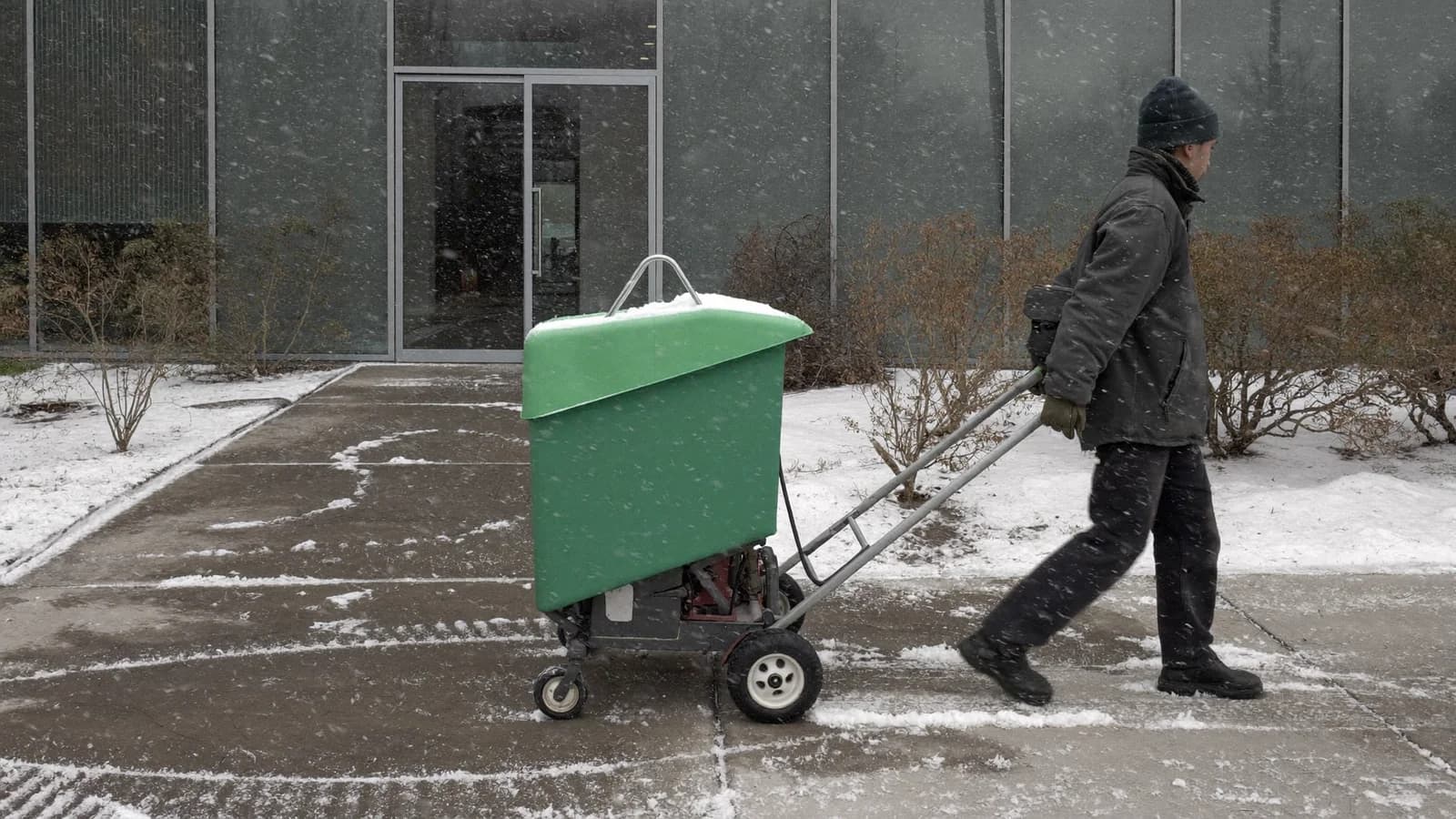
CPM pre-wets its salt so it starts working faster and holds up better at colder temperatures and in heavy storms. Its trucks also carry liquid tanks and sprayers for lot-wide liquid de-icing, and walkways are treated with sidewalk salt dispensers. If you're concerned about concrete, blacktop or plantings, ask about ice control products that are less corrosive than traditional ice melt.
Where will the snow go?
Every lot runs out of room eventually. Ask where piles will be placed, how they'll be kept away from entrances, drains and parking you need, and what happens when they get too big.
For large sites, that answer should include snowfall clearing and hauling: moving snow off the pavement entirely so the lot keeps its capacity.
What happens in a major storm?
A normal snowfall and a long, heavy storm need different plans. Ask whether the contractor has a contingency procedure, what triggers it and how it changes the service order.
CPM's contingency and emergency plans cover blizzards and other large storms that drop 8 inches or more at one time, including hauling once accumulation passes that point.
How is the contract priced, and what counts as billable?
Ask how the contract is billed: for example a set amount for the season, by visit or by storm, and whether de-icing is included or priced separately from plowing. Whatever the structure, ask for it in writing, along with what counts as a separate charge.
CPM starts with a walk-through and a clear, honest written estimate, with no surprise charges.
Who do you call during a storm?
Ask who your contact is, how to reach them during a storm and how quickly they respond to a missed area or an emergency. One named point of contact is easier than a general phone line when your lot needs attention at 5 a.m.
How will the work be documented?
Ask how visits are recorded: dates, times and what was done. The Snow & Ice Management Association's procurement standard includes guidelines for monitoring procedures and documentation, along with contract terms, dates and subcontractor use. It's a reasonable checklist for any property manager reviewing a contract.
Why does a written site plan matter before the first storm?
A written site plan means the crew assigned to your property already knows the lot, the walks and where the snow goes before the first storm. That matters more here than in most places.
The National Weather Service describes lake-effect snow as clouds that grow into a narrow band producing 2 to 3 inches of snow per hour or more. Lake-effect snow is part of winter here, so properties in Monroe and Wayne County, such as the Route 104 corridor in Webster, should plan for heavy snowfall rates.
At CPM, every commercial site gets a written plan before the season, including the contingency procedure for storms of 8 inches or more. Before each snow season, the crew responsible for a site trains on that site, so they aren't learning the property during a storm.
Planning your winter service? Request a free estimate and we'll walk the site with you before the season.
Does the contract change by property type?
Yes. The scope and priorities should match how your property is used, not a generic template.
A shopping center needs open lanes and clear storefront walks before customers arrive. A healthcare facility needs safe entrances, ramps and drop-off areas. An HOA needs community roads and drives cleared on a schedule residents can count on. An office park or industrial site may need loading docks and employee lots handled first.
CPM designs a winter plan for each commercial property type it serves, including corporate offices, shopping centers, industrial properties, hospitals and healthcare facilities, retail stores, plazas, office parks and HOAs. Small lots need a plan too: in village settings like East Rochester, storefront walks come first and snow often has to be hauled out so it doesn't take up parking.
When should you set up a commercial snow contract?
Set it up in the fall, before the first storm. The National Weather Service describes lake-effect snow as common across the Great Lakes region in late fall and winter, so waiting until the first snowfall leaves little time for a walk-through and a written plan.
A fall start also lets you line up snow service with the rest of your seasonal work. If you're already planning a fall commercial property maintenance plan, add winter service to the same conversation.
Frequently Asked Questions
What should a commercial snow removal contract include?
It should list every surface in scope, what triggers service, how ice is treated, where snow is stored, the plan for major storms, how billing works and who to contact. If an item isn't in writing, ask for it before you sign.
Does CPM Property Services offer commercial snow contracts in Rochester?
Yes. CPM provides commercial snow plowing, sidewalk clearing, de-icing and snow hauling for plazas, office parks, HOAs and other commercial properties in Monroe and Wayne County. Each commercial site gets a written plan before the season.
What happens if a storm drops more than 8 inches?
CPM has a contingency and emergency plan for storms that drop 8 inches or more at one time. It includes clearing and hauling once accumulation passes that point, with a plan for where the snow goes.
When is the best time to sign a commercial snow contract?
In the fall, before the first storm. That leaves time for a site walk-through, a written plan and pre-season crew training on your property, instead of setting it all up after snow is already on the ground.
How do I get a commercial snow removal estimate?
Request a free estimate online or call. CPM walks the property with you and puts together a clear written estimate with no surprise charges. Use (585) 621-8488 for Monroe County properties or (315) 904-4700 for Wayne County properties.
Get your commercial snow contract in place before the first storm
Get a free, no-pressure estimate from CPM Property Services. We'll walk your site, talk through scope and storm plans, and put it in writing. We serve Monroe & Wayne counties year-round.
Get a Free Estimate · Monroe County: (585) 621-8488 · Wayne County: (315) 904-4700
Sources
- National Weather Service, "Lake Effect Snow": https://www.weather.gov/safety/winter-lake-effect-snow
- Snow & Ice Management Association, Standards (Procurement Standard): https://www.sima.org/standards
- CPM Property Services service pages: Snow Management, De-Icing & Ice Management, Snowfall Clearing & Hauling, Winter Services Customer Profile
Related posts
CPM Property Services Team
Landscaping & snow management pros serving Monroe & Wayne county, NY.