Property Maintenance
Tree Maintenance in Monroe County, NY: Pruning Schedules and Storm Preparation Before Winter
September 14, 2026 · By CPM Property Services Team
Why Tree Maintenance Gets Overlooked
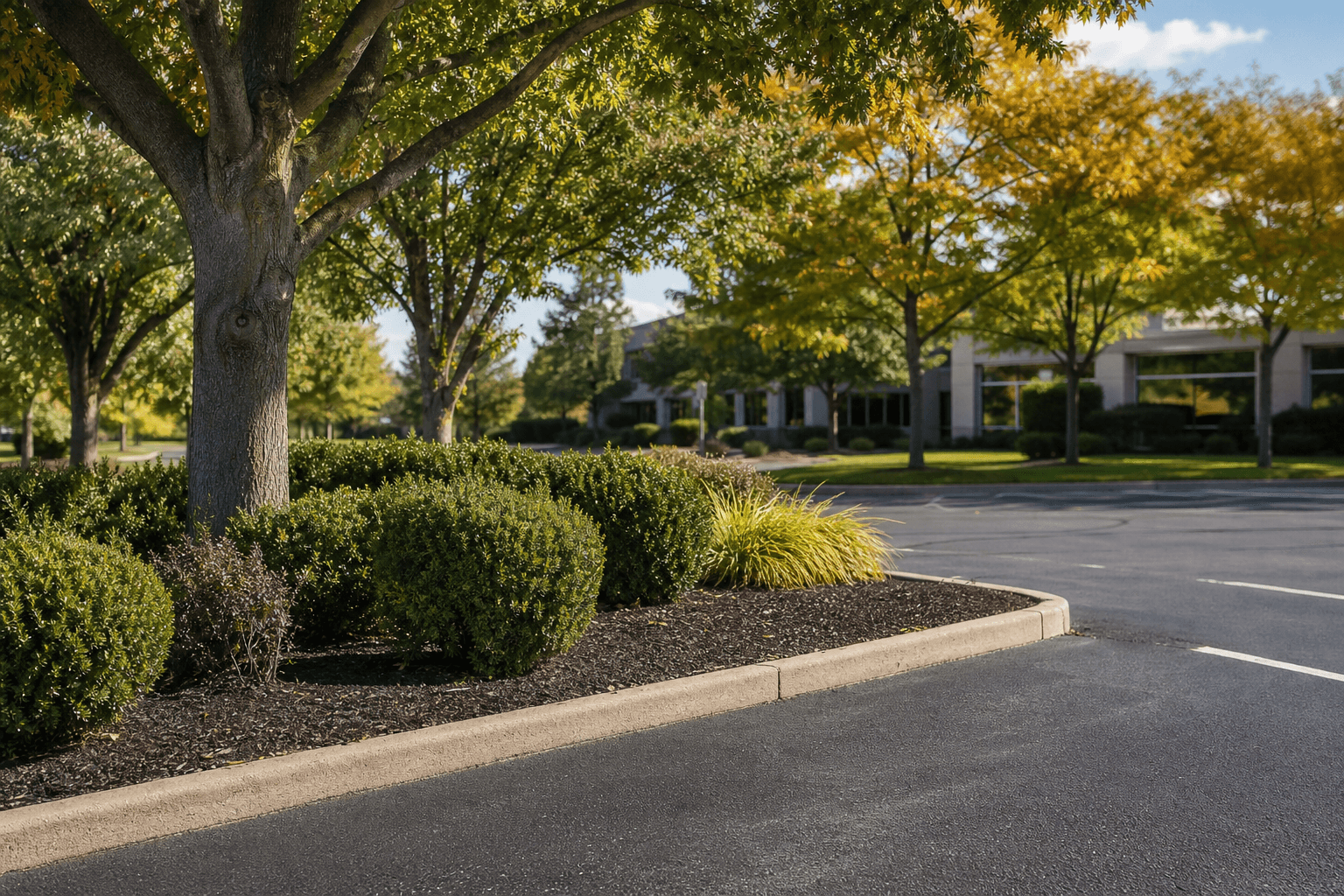
If you manage a commercial property or maintain a home landscape anywhere between Webster and Henrietta, you already know Rochester-area trees don't get an easy year. They leaf out into wet spring soil, push through humid summer growth, and then head into a winter that regularly brings heavy, wet snow and ice loading — the kind of weather that turns an overlooked dead limb into a liability almost overnight. Waiting until a branch is already down on a walkway or a parking lot is the expensive way to find out a tree needed attention.
The good news: most of that risk is manageable with the right pruning schedule and a pre-winter inspection. Here's what Monroe and Wayne County property owners should know about keeping trees healthy year-round and storm-ready before the snow flies.
Tree maintenance often sits at the bottom of a property maintenance list, behind mowing, mulching, and seasonal cleanups. Trees grow slowly enough that problems can develop for years without an obvious sign — until a storm exposes exactly which limbs were structurally weak. For commercial property managers in particular, an untended tree near a parking lot, walkway, or building entrance isn't just a landscaping issue; it's a liability and safety concern that a property maintenance plan should account for on a set schedule, not an as-needed basis.
When to Prune Trees in the Rochester Area
Timing matters more than most property owners expect:
- **Late winter to early spring (while trees are still dormant):** This is the preferred window for structural pruning on most deciduous species. Cuts made before new growth starts heal faster and are easier to assess since there's no leaf cover hiding the branch structure.
- **Summer:** Light corrective pruning — removing crossing branches, minor deadwood, or growth that's encroaching on a building, sign, or sightline — can be done without stressing the tree, but heavy structural cuts are best avoided during peak growing season.
- **Late summer through fall:** This is the window to prioritize for storm preparation. The goal isn't heavy pruning; it's inspection — identifying dead, cracked, or weakly attached limbs before they're carrying a load of wet snow or ice.
- **Avoid pruning most species in early fall** when possible, since fresh cuts heal more slowly as trees slow down for dormancy. An inspection now, with corrective work scheduled for late winter, is usually the better sequence.
Species matters too — flowering ornamentals, evergreens, and shade trees don't all follow the same calendar, which is one reason a professional walk-through beats a generic rule of thumb.
Storm Preparation: What to Look For Before Winter
Before the first significant snow or ice event, a pre-winter tree check should cover:
- **Dead or dying limbs.** Bare branches with no bark flexibility, especially anything overhanging a roof, parking area, or walkway.
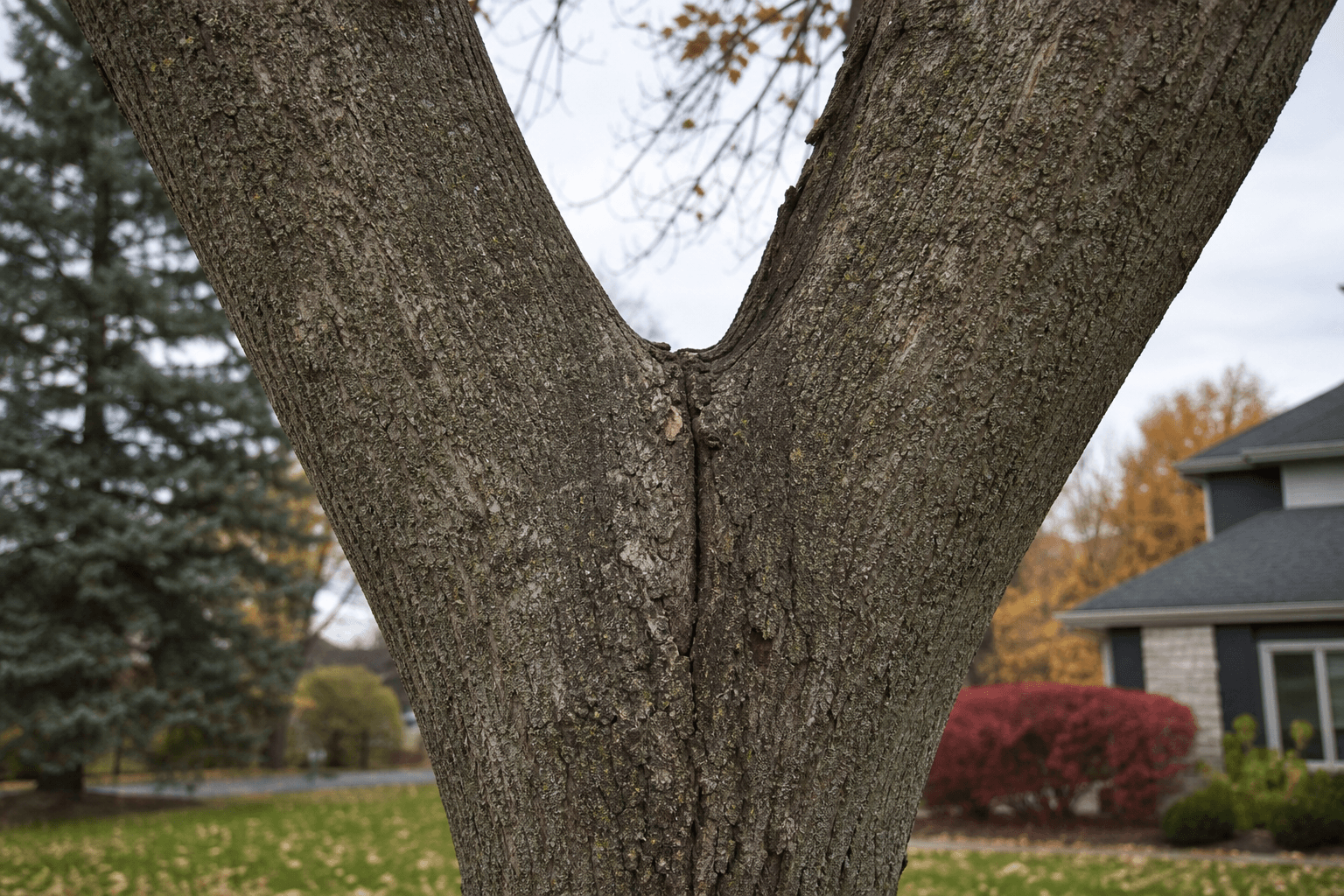
- **Cracked or split branch unions.** Narrow, V-shaped branch angles are more prone to splitting under snow and ice load than wider U-shaped unions.
- **Leaning trees or exposed root flare.** A tree that has shifted, or one where the soil has heaved away from the base, may have compromised root support.
- **Overhead utility line clearance.** Branches growing into power lines are both a safety hazard and a common cause of outages during ice storms.
- **Canopy density near structures.** Dense, unthinned canopies catch more snow load, which increases the chance of limb failure directly over a building, vehicle, or walkway.
For commercial properties, this kind of proactive review fits naturally alongside broader fall property maintenance planning, since a property manager evaluating fall cleanup, drainage, and winter readiness should be looking at tree risk in the same pass.
What a Professional Tree Maintenance Visit Includes
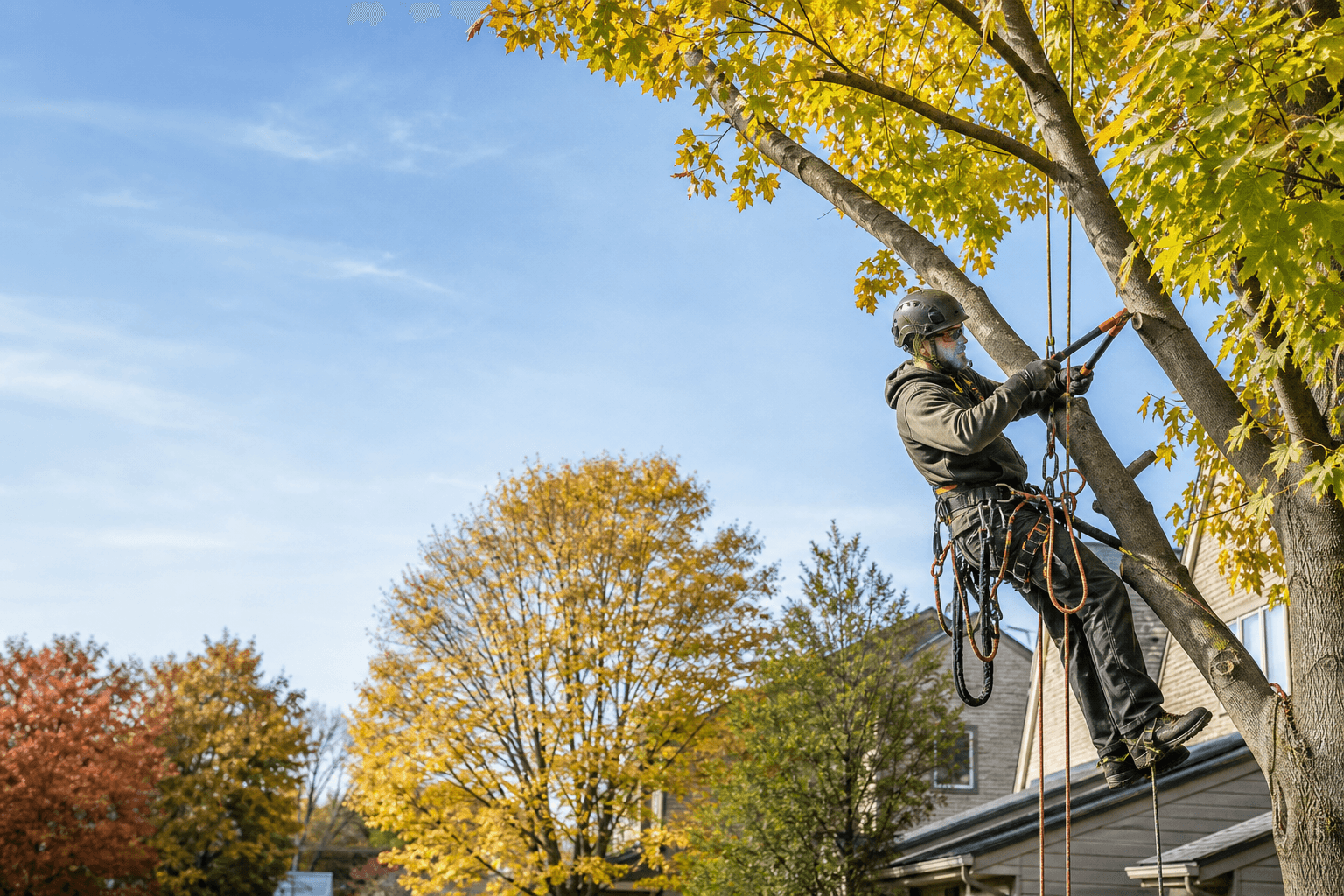
A property owner walking their own lot can catch the obvious problems — but a trained eye is better at spotting the structural issues that aren't visible from the ground, like early decay, girdling roots, or branch unions that look fine from a distance but aren't. A professional visit typically includes:
- A full-canopy inspection, not just a look at the lower branches
- Removal of dead, damaged, or diseased wood
- Corrective pruning to improve structure and reduce future storm risk
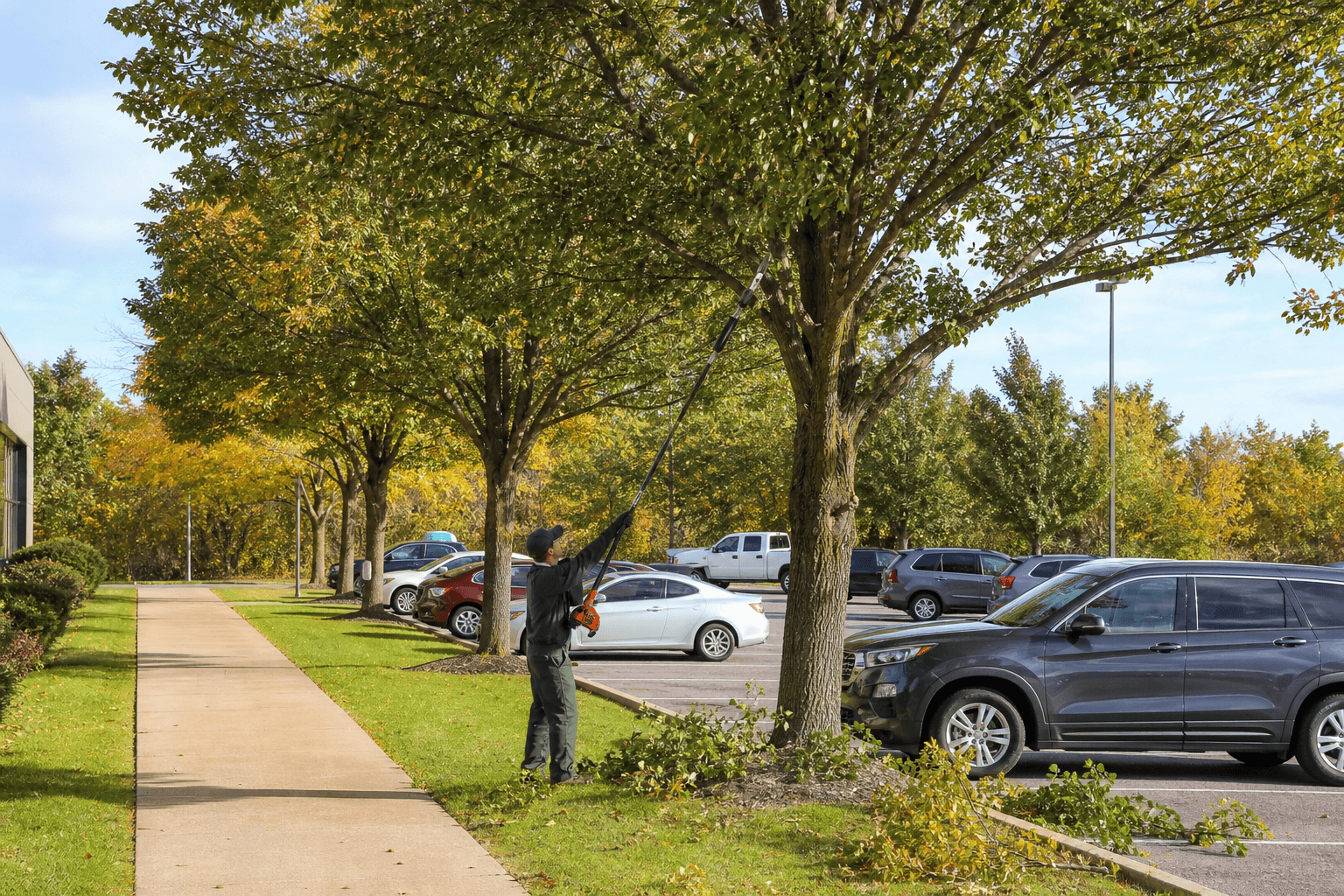
- Clearance pruning around buildings, walkways, parking areas, and sightlines
- A written summary of any trees that need closer monitoring or follow-up work
This is also the point where a maintained landscape and a storm-ready property overlap. A well-pruned tree isn't just healthier — it's less likely to be the thing that closes a parking lot or blocks a walkway after the next storm.
For property owners handling this themselves, the biggest limitation isn't effort — it's visibility. Structural weaknesses like early-stage decay, girdling roots, or a compromised branch union often aren't visible from the ground, and a ladder-and-guess approach can miss exactly the defect that matters most. That's the main reason a professional walk-through, done annually and timed ahead of storm season, catches problems that a quick visual check from the driveway won't.
Common Trees on Monroe and Wayne County Properties
Rochester-area landscapes — from Webster and Irondequoit to Pittsford and Palmyra — include a mix of mature shade trees, ornamental flowering species, and evergreens, often planted decades apart on the same lot. That mix matters for maintenance planning: a large, older shade tree with a wide canopy carries far more storm-season risk than a young ornamental, and evergreens hold snow load differently than deciduous species that drop their leaves before winter. A property with a mix of tree ages and types generally benefits from a walk-through that treats each tree on its own merits rather than applying one blanket schedule to the whole lot. This is especially true on commercial properties where trees were planted at different points during a site's history and may never have been evaluated together.
Trees and Retaining Walls: A Connection Worth Knowing
One detail property owners often miss: tree roots and hardscape features interact more than people expect. Large trees planted too close to a retaining wall can, over years, contribute to soil movement and pressure against the wall structure as roots expand. If you're planning new plantings or evaluating an aging retaining wall on a Wayne County or Monroe County property, it's worth having both assessed together rather than separately.
Commercial vs. Residential Considerations
For homeowners, tree maintenance is mostly about protecting the house, driveway, and family from storm damage, plus keeping the landscape looking healthy. For commercial property managers, the stakes are a little different:
- **Liability exposure** from a limb failure over a parking lot, sidewalk, or entrance
- **Tenant and customer safety** during and after storm events
- **Insurance and risk management** documentation, since a maintained tree program shows a proactive approach to property risk
- **Coordination with snow and ice season**, since storm-damaged limbs can block plowing routes or damage parking lot surfaces
Either way, the underlying principle is the same: inspect before the season that causes the damage, not after.
Frequently Asked Questions
How often should trees be professionally inspected in the Rochester area?
Is fall a good time to prune trees in Monroe County?
What's the biggest storm-season tree risk for commercial properties?
Can tree roots damage a retaining wall?
Does CPM Property Services handle both tree maintenance and winter snow service?
An annual inspection — timed for late summer or early fall, ahead of winter storm season — is a reasonable baseline for most properties. Larger commercial sites with more trees, or properties with older or previously storm-damaged trees, may benefit from more frequent checks.
Fall is better used for inspection than heavy pruning. Structural cuts heal best when made during late-winter dormancy; fall is the time to identify what needs attention so it can be scheduled for the right window.
Dead or weakly attached limbs over high-traffic areas — parking lots, walkways, and entrances — are the most common source of both property damage and liability exposure during heavy snow and ice events.
Over time, large trees planted close to a retaining wall can contribute to soil pressure and movement against the structure as their root systems expand. It's worth having trees near retaining walls evaluated as part of a broader property assessment.
CPM Property Services works with Monroe and Wayne County property owners on both landscaping and property maintenance needs, including tree maintenance, as well as commercial winter services. Request a free estimate to discuss what your property needs before the next season.
Get Your Property Storm-Ready
Waiting until a storm brings a limb down is the most expensive way to deal with tree risk. If it's been a while since your Monroe or Wayne County property had a professional tree walk-through, now — before winter weather arrives — is the right time. Request a free estimate and CPM Property Services will evaluate your trees alongside your broader landscaping and property maintenance needs. Hear from other Monroe and Wayne County property owners on the CPM testimonials page.
**Monroe County:** (585) 621-8488
**Wayne County:** (315) 904-4700
Frequently Asked Questions
How often should trees be professionally inspected in the Rochester area?
An annual inspection — timed for late summer or early fall, ahead of winter storm season — is a reasonable baseline for most properties. Larger commercial sites with more trees, or properties with older or previously storm-damaged trees, may benefit from more frequent checks.
Is fall a good time to prune trees in Monroe County?
Fall is better used for inspection than heavy pruning. Structural cuts heal best when made during late-winter dormancy; fall is the time to identify what needs attention so it can be scheduled for the right window.
What’s the biggest storm-season tree risk for commercial properties?
Dead or weakly attached limbs over high-traffic areas — parking lots, walkways, and entrances — are the most common source of both property damage and liability exposure during heavy snow and ice events.
Can tree roots damage a retaining wall?
Over time, large trees planted close to a retaining wall can contribute to soil pressure and movement against the structure as their root systems expand. It’s worth having trees near retaining walls evaluated as part of a broader property assessment.
Does CPM Property Services handle both tree maintenance and winter snow service?
CPM Property Services works with Monroe and Wayne County property owners on both landscaping and property maintenance needs, including tree maintenance, as well as commercial winter services. Request a free estimate to discuss what your property needs before the next season.
CPM Property Services Team
Landscaping & snow management pros serving Monroe & Wayne county, NY.