Property Maintenance
Irrigation Winterization in Rochester, NY: When to Shut Down Your Sprinkler System
October 5, 2026 · By CPM Property Services Team
Quick summary
- Irrigation winterization in Rochester, NY means shutting off water to the system, draining or blowing out the lines, and protecting the backflow device before the first hard freeze.
- Timing matters more than the calendar date. The right window is a stretch of cold nights, not a fixed day in October.
- Skipping or rushing a shutdown risks cracked pipes, a damaged backflow preventer, and a broken system discovered only when you turn it back on in spring.
- Irrigation shutdown is one piece of a broader fall property maintenance plan alongside cleanup, aeration, and pruning.
If you are a homeowner or commercial property owner in Monroe or Wayne County wondering when to handle irrigation winterization this year, you are asking at the right time. Rochester-area properties on a sprinkler system face a real risk every fall: water left sitting in exposed pipes, valves, or the backflow preventer can freeze, expand, and crack fittings that only reveal the damage the following spring, when the system is turned back on and water sprays where it should not.
This guide covers when irrigation winterization should happen relative to the first hard freeze, what a proper shutdown actually involves, what is at risk if it is skipped or rushed, and how it fits into a broader fall maintenance plan for properties across Webster, Greece, Penfield, Pittsford, Palmyra, and the rest of CPM's Monroe and Wayne County service area.
Why irrigation winterization matters in a Rochester winter
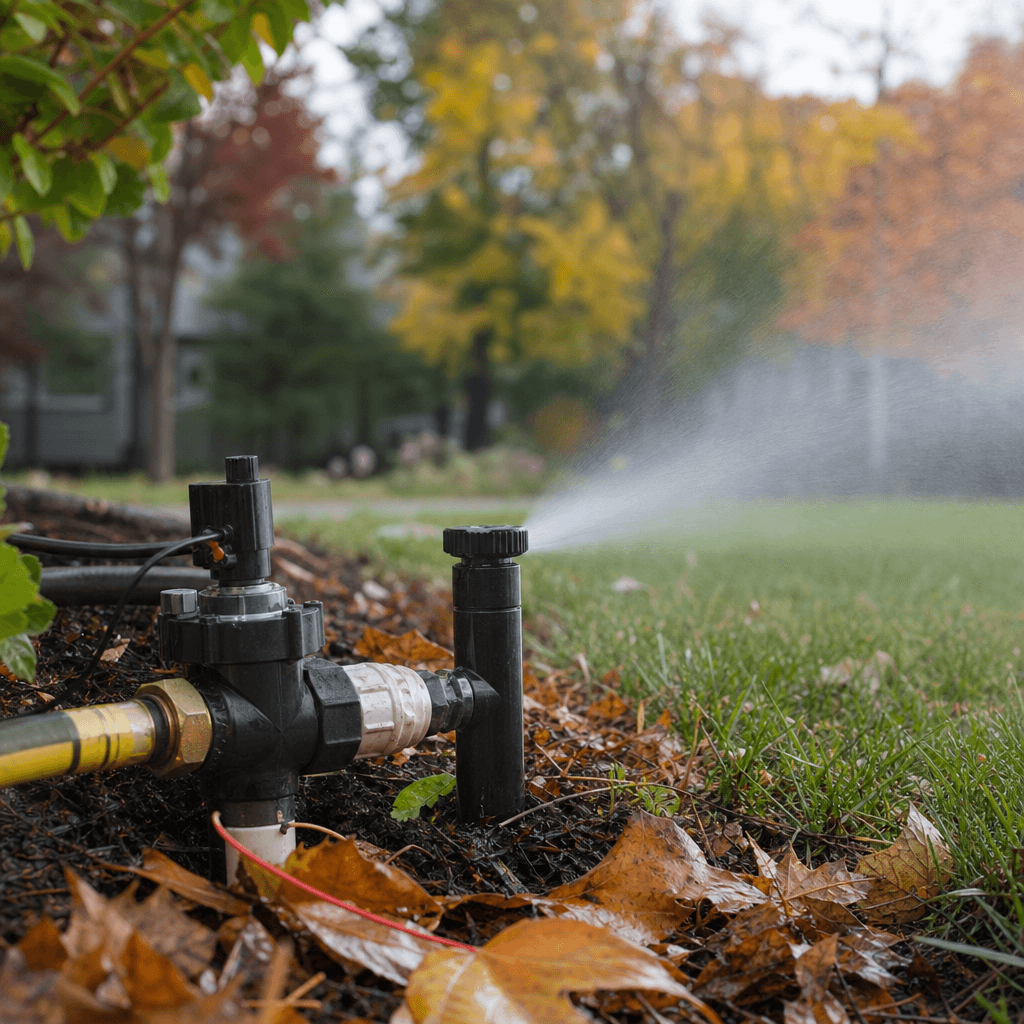
An irrigation system is mostly water-filled pipe sitting at or just below the surface, plus exposed components above ground: the backflow preventer, valve boxes, and any above-ground piping near the water meter or a hose bib. Water expands as it freezes. In a sealed pipe or fitting, that expansion has nowhere to go, and something gives: a cracked PVC line, a split valve, or a damaged backflow device.
- Buried lines are not fully protected. Depth helps, but shallow lines, risers, and anything near the surface are still exposed once the ground freezes hard.
- The backflow preventer is usually the most exposed part of the system and the most expensive to replace if it cracks.
- Damage is often invisible until spring startup, which means a skipped fall shutdown can turn into a surprise repair bill and a delayed first watering of the season.
None of this is unique to any one property type. The same freeze risk applies to a residential system with a few zones and a commercial property with a larger irrigated area under a property maintenance plan.
Lake Ontario also plays a role in how this plays out across the service area. Communities closer to the lakeshore tend to see a milder, slower temperature drop in early fall than inland communities, which means the first hard freeze does not necessarily arrive on the same day everywhere in Monroe and Wayne County. A property in Irondequoit or Greece may see its first hard freeze later than one farther south in Henrietta or Mendon, which is one more reason to plan the shutdown around the forecast for your specific location rather than a single countywide date.
When to schedule irrigation winterization in Monroe and Wayne County
There is no single calendar date that works every year. The right time to shut down is tied to the weather pattern, not the month. A reasonable rule of thumb for the Rochester area: plan the shutdown once overnight lows are consistently dropping into the mid-30s and before the first hard freeze is forecast, rather than waiting until after a cold night has already caught the system off guard.
- Watch the overnight forecast, not just the daytime high. A mild afternoon can mask a hard freeze overnight.
- Scheduling earlier than needed costs you a little late-season watering. Scheduling too late risks the pipe damage this whole process exists to prevent.
- If a property has a large or complex zone layout, booking the shutdown before the rush of the first cold snap avoids being stuck on a waitlist during the busiest week of the season.
Not sure when your system should come down this year? Request a free estimate and CPM will plan the shutdown around your property and the forecast. Request a free irrigation shutdown estimate
What a proper irrigation shutdown actually involves
A rushed shutdown that just turns off the water at the valve is not the same as a full winterization. A thorough shutdown generally includes:
- Shutting off the main water supply to the irrigation system at the isolation valve.
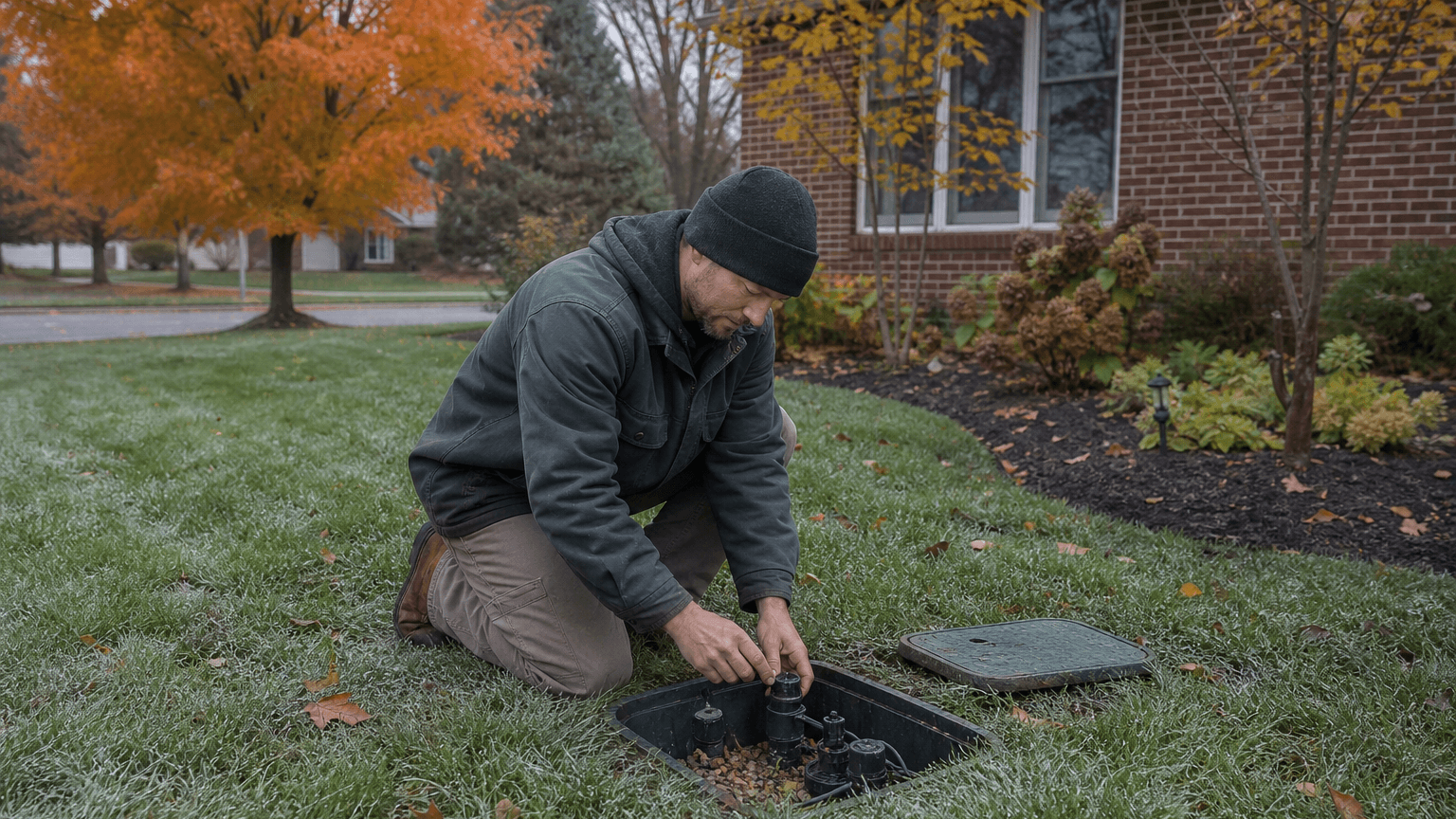
- Draining or blowing out the lines so standing water does not sit in the pipe through the winter. Blow-out methods use compressed air to clear water from each zone in turn.
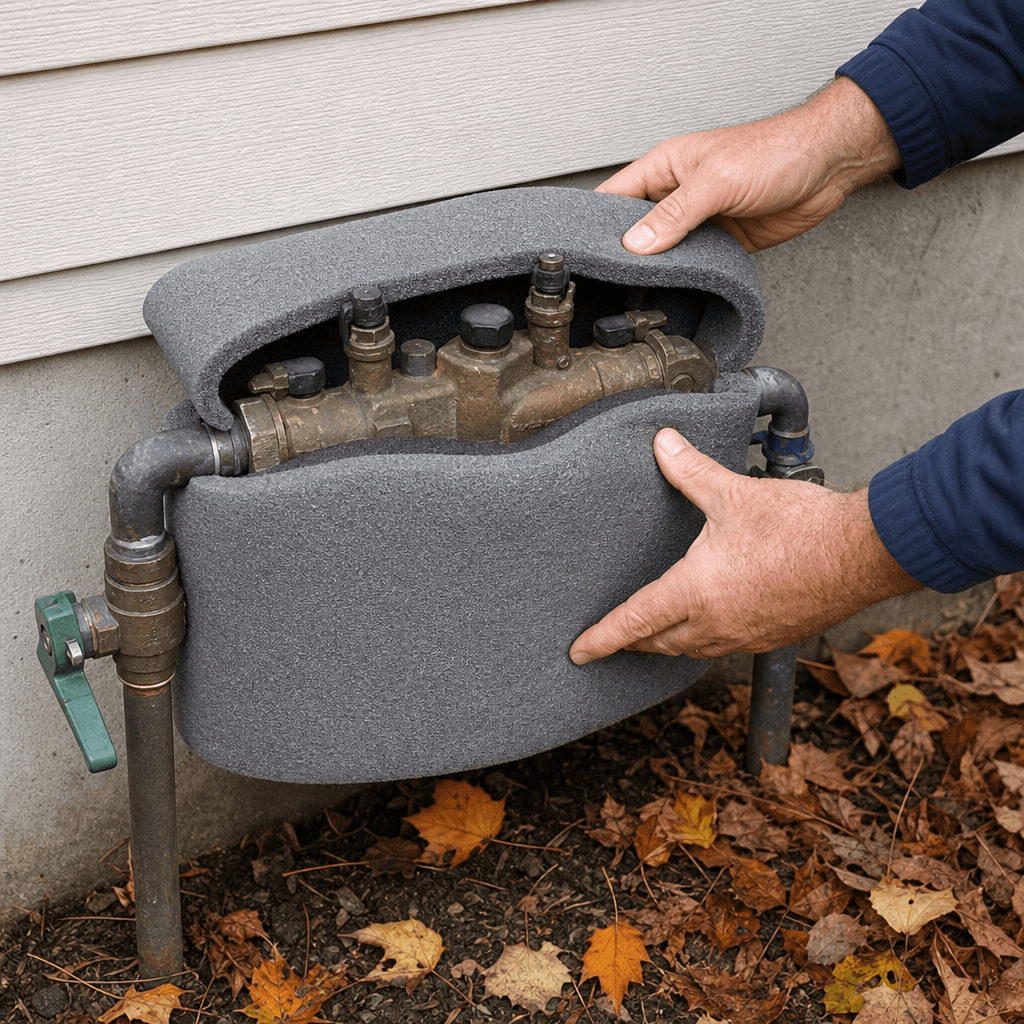
- Protecting the backflow preventer, which is often the component most exposed to cold air and the most costly to replace.
- Insulating or draining any above-ground piping near the meter, valve manifold, or hose connections.
- Setting the controller to the off or rain mode so it does not try to run a zone with no water behind it.
Each step matters. Skipping the blow-out and only shutting off the valve still leaves water sitting in the lines, which is the exact condition that leads to a cracked pipe once a hard freeze sets in.
What happens if irrigation winterization gets skipped or rushed
The most common outcome is not a dramatic failure in December. It is a quieter problem that shows up at spring startup: a cracked lateral line discovered when a zone sprays water where there should be a clean arc, a damaged backflow preventer that needs replacement before the system can be certified for the season, or a valve that no longer seals. Any of these turns a routine spring startup into a repair call, and in some cases delays watering during a dry early spring stretch when turf and new plantings need it most.
Commercial properties face an added wrinkle: a backflow preventer failure can affect whether the system meets local cross-connection control requirements, which is one more reason a careful fall shutdown is worth the time it takes.
How irrigation shutdown fits into your fall maintenance plan
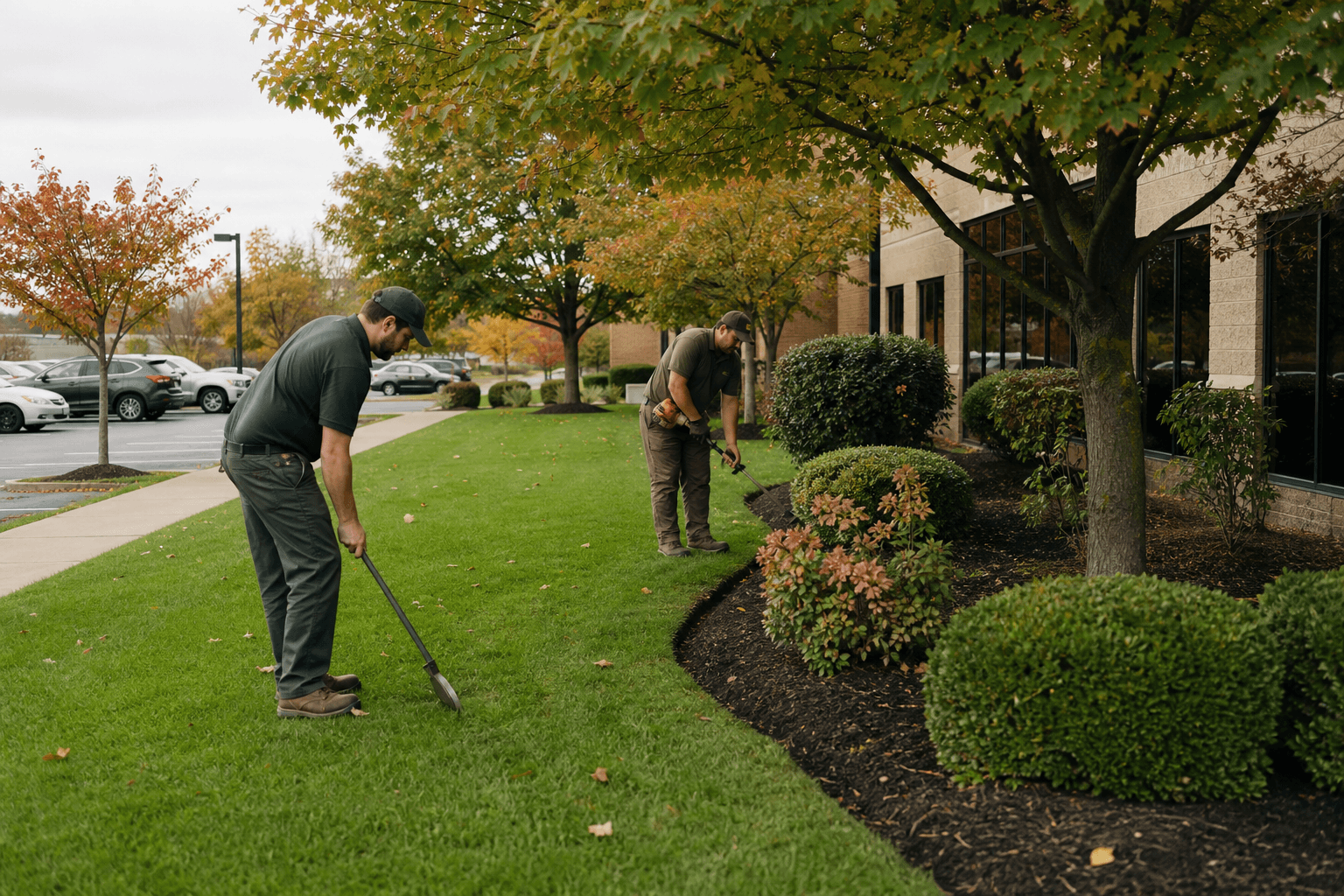
Irrigation winterization rarely stands alone. It is usually one task on a fall property checklist that also includes cleanup, aeration and overseeding, pruning, and a look at drainage before winter. Properties on a property maintenance plan typically have shutdown timed alongside these other fall tasks instead of scheduled as a separate, one-off call.
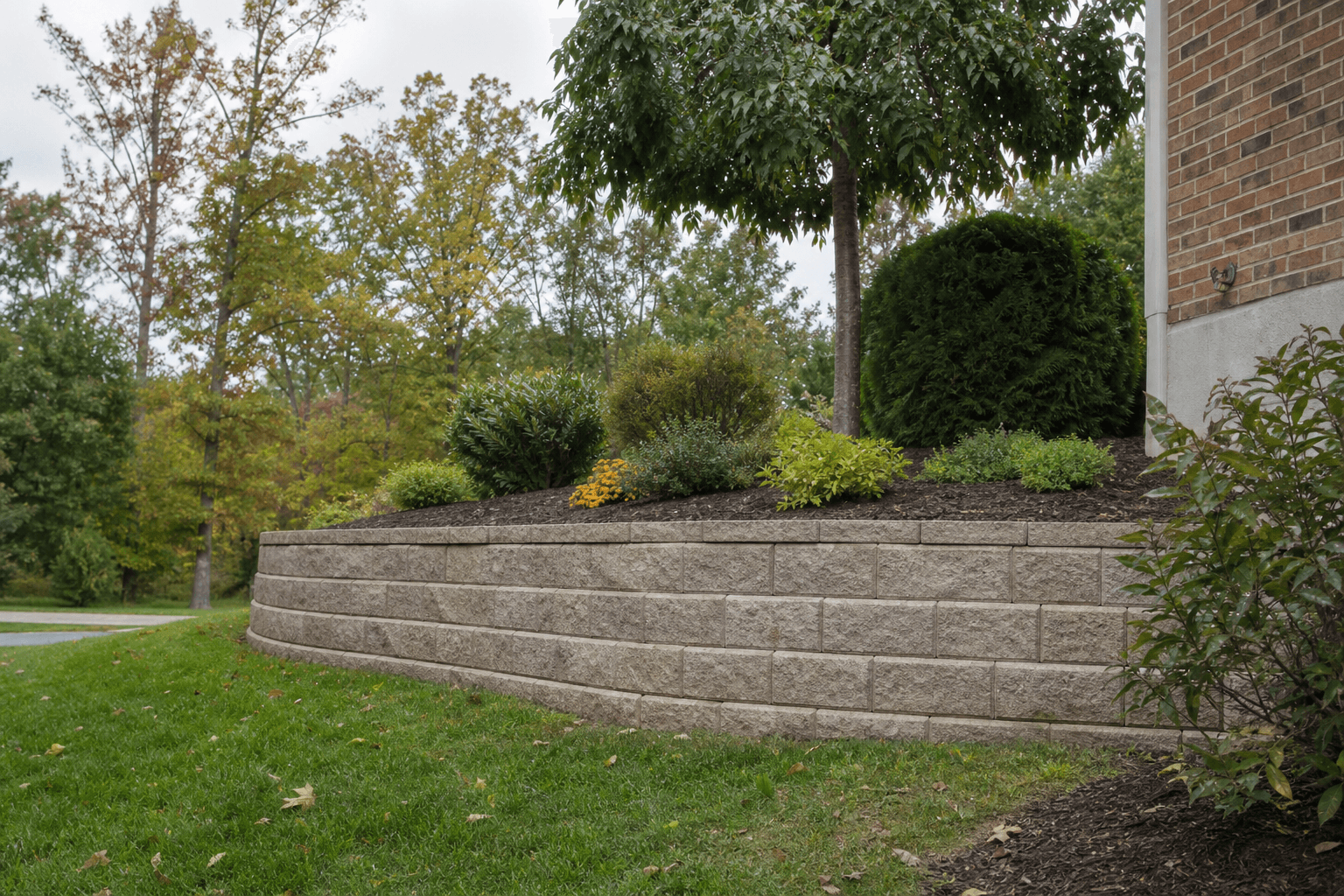
If your property also has beds that need a fresh layer of mulch or stone before winter, or a retaining wall or drainage issue that gets worse with freeze-thaw cycles, fall is a practical time to address those at the same time the irrigation system comes down, rather than making three separate trips to the property.
Commercial sites add another layer: irrigated parking islands, entrance beds, and any zone tied into a larger landscaping contract all need the same shutdown attention as a residential system, just across more zones and often more backflow devices. Coordinating irrigation shutdown with the rest of a property's fall service calendar avoids a crew making separate trips for tasks that are easier to handle together.
Spring startup: why a careful fall shutdown pays off
The payoff for a proper fall shutdown shows up in spring. A system that was drained, blown out, and protected correctly generally starts up faster: no cracked lateral lines to chase down zone by zone, no backflow preventer that failed over the winter, and no guessing about which valve was left partly open. A rushed or skipped fall shutdown tends to turn spring startup into a troubleshooting job instead of a routine one, which can push back the first watering of the season right when new plantings and spring-stressed turf need it most.
Thinking of fall shutdown and spring startup as two halves of the same service, rather than unrelated calls months apart, is the simplest way to keep an irrigation system running the way it is supposed to year after year.
Frequently Asked Questions
When should irrigation winterization happen in Rochester, NY?
Plan it once overnight lows are consistently dropping into the mid-30s and before the first hard freeze is forecast, rather than waiting until after a cold night has already hit. There is no single calendar date that applies every year; the weather pattern drives the timing.
What is included in a full irrigation shutdown?
A full shutdown generally includes turning off the main water supply to the system, draining or blowing out the lines with compressed air, protecting the backflow preventer, insulating or draining any above-ground piping, and setting the controller to off or rain mode.
What happens if I skip winterizing my sprinkler system?
Water left in the lines or backflow preventer can freeze and crack fittings or the device itself. The damage is often invisible until spring startup, when a cracked line sprays water unexpectedly or the backflow preventer fails and needs replacement before the system can run.
Can I winterize my own irrigation system?
Some homeowners handle a basic valve shutoff themselves, but a proper blow-out requires compressed air equipment and knowing each zone's layout. A professional shutdown reduces the risk of leaving water trapped in a section of line that gets missed.
Does a commercial property need anything different for irrigation winterization?
The same freeze risk applies, but commercial systems are often larger with more zones and a backflow preventer that may be subject to local cross-connection control requirements, which is one more reason a careful, documented shutdown matters.
Schedule your irrigation shutdown before the first freeze
If you want your Rochester-area irrigation system shut down correctly before the cold sets in, request a free estimate from CPM Property Services. You can also call the Monroe County office at (585) 621-8488 or the Wayne County office at (315) 904-4700. To see how irrigation shutdown fits into a broader plan for your property, visit CPM's property maintenance and landscaping pages, or read what customers say on the testimonials page.
CPM Property Services Team
Landscaping & snow management pros serving Monroe & Wayne county, NY.