
Snow Management
Commercial Sidewalk Snow Removal in Rochester, NY: Who Has to Clear the Walk?
November 16, 2026 · By CPM Property Services Team
Commercial sidewalk snow removal in Rochester, NY starts with one question: who is responsible for the walk in front of your building? In the City of Rochester, the city says it is the property owner. This guide covers what that means, what a sidewalk crew does and what to settle with a contractor before the first storm.
Quick summary
- The City of Rochester says property owners are responsible for the sidewalk in front of their property.
- The city also plows some sidewalks, but it says owners must remove the snow and ice that remains.
- Rules differ by town and village, so check the code where your property sits.
- A good sidewalk plan names the walks, the start time and who handles ice.
- Put the plan in writing before the first storm, not during it.
Who is responsible for clearing the sidewalk at a commercial property?
In the City of Rochester, the property owner is responsible for removing snow from the sidewalk in front of the property. The city's own page says so directly: "Per City Code, it is the responsibility of property owners to remove snow from the sidewalk in front of their property."
That is the city's wording, and it is general information, not legal advice. Your property may be in a different town or village, where the rules can differ. This guide does not state a deadline, a fine or a code section, because we did not read a current code text for those. Look up your own municipality's code, or ask the town or village office.
Doesn't the city plow the sidewalks?
The City of Rochester says it plows some sidewalks as a supplemental service, but the owner's duty does not go away. The city's page says it plows sidewalks when 4 inches of new snow has freshly fallen, dependent upon weather events and forecasts and the condition of the sidewalks, plows sidewalks at least five feet wide, and adds that "Property owners are responsible to remove any remaining snow and ice."
Two details matter for a business:
- The city's service depends on conditions. The 4-inch figure depends on weather events, forecasts and the condition of the sidewalks, so do not plan around it; the owner remains responsible for any remaining snow and ice.
- The timing follows foot traffic, not your hours. The city says sidewalk plowing "usually happens in the evening and early morning" when pedestrian traffic is lowest, and that this can change with the storm.
So treat the city's service as a backup, not a plan for when customers arrive. Those figures describe the City of Rochester only. Your own town may do something different.
Why do sidewalks matter more for a business than a lot?
A walk that is not cleared can keep people from reaching your door at all. The city's page notes that "even 1 inch of snow on the sidewalk can drastically impede movement" for people with physical disabilities. Customers, employees and tenants all use the walk.
CPM's sidewalk clearing page describes slip-and-fall accidents as a risk property owners face in winter, and it ties clearing the walks to protecting people on the property. We are not offering legal or insurance advice here. If you have questions about liability, ask your attorney or insurance agent.
What does a commercial sidewalk crew actually do?
A commercial sidewalk crew clears snow from the walks and then applies ice control to help manage ice, with no guarantee of ice-free walks. CPM's service page lists the equipment it uses for this work: commercial-grade snow sweepers, snow blowers and sidewalk salt dispensers.
Clearing and ice control are two steps, and it helps to ask about both:
- Clearing. Snow comes off the walk, and a good plan also names the entrances, ramps, curb cuts and crossings between the lot and the door.
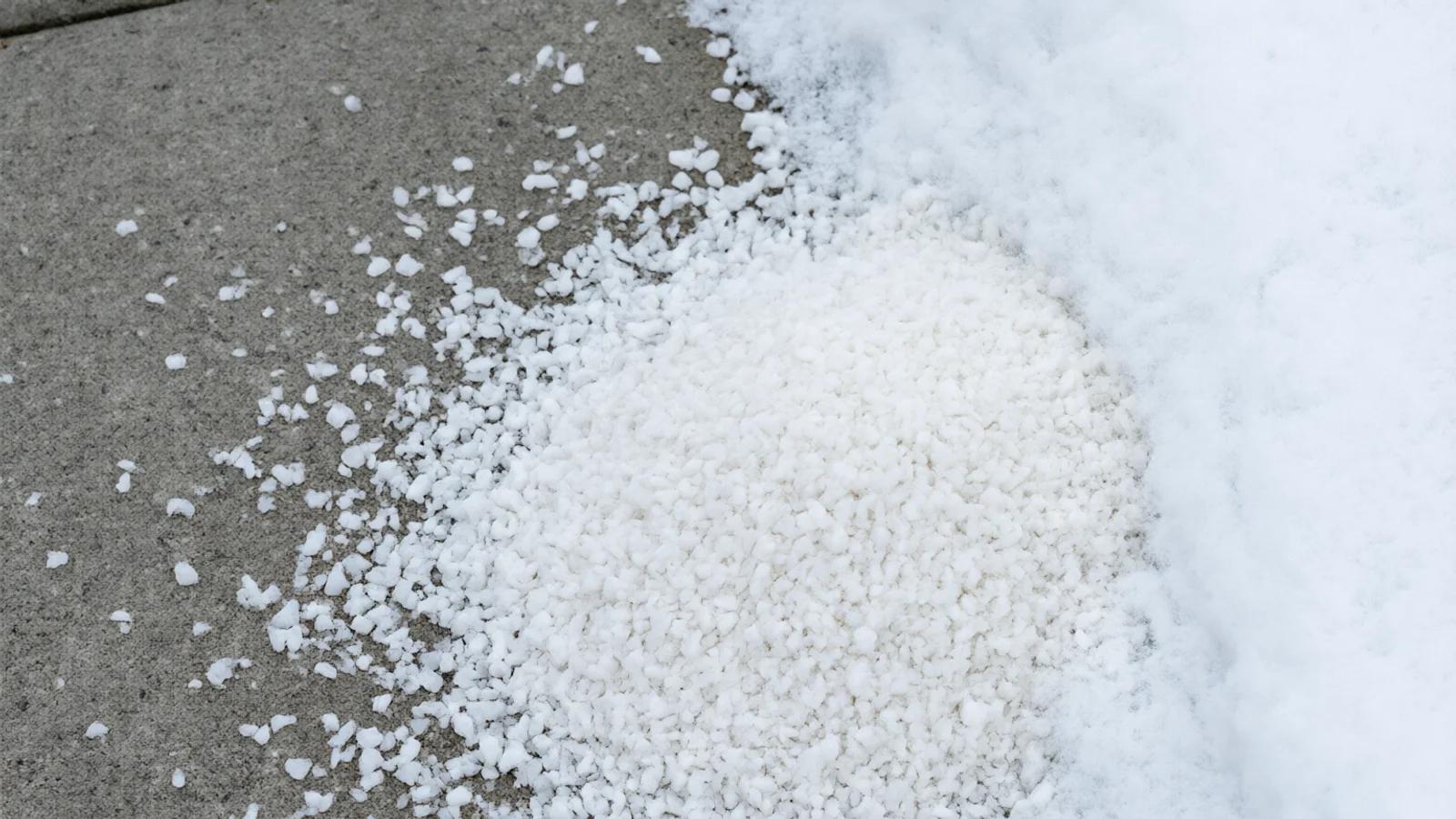
- Ice control. Salt is spread on the cleared surface. CPM's de-icing page says its salt is pre-wetted so it acts faster, and that crews use sidewalk salt dispensers on walkways.
For more on how that second step works on a commercial property, see our post on commercial de-icing services in Rochester, NY.
What does sidewalk work look like in a village or storefront district?
Storefront walks need to be open when the shops open, and they often sit next to lots with little room for snow. CPM's local pages describe the same priority in two village settings:
- East Rochester. CPM's East Rochester page says storefront sidewalks and the small lots behind them are the priority, "cleared and salted before the shops open."
- Pittsford. CPM's Pittsford page says sidewalk crews handle the village storefronts.
These pages show the kind of work CPM lists in those places. They do not describe your property, so describe your own walks when you ask for an estimate.
What should you settle with a contractor before the season?
Settle the walks, the timing and the ice plan in writing before the first storm. A short list is enough. Ask:
- Which walks are included? Name the front walk, side and rear entrances, ramps, curb cuts and any shared walkway.
- Who decides when to start? Ask what snow depth or condition sends a crew to the walks, and whether that differs from the lot.
- What is the target for opening time? Do not assume. Ask whether walks can be cleared and salted before your doors open, and how that is communicated.
- How is ice handled after clearing? Ask about salt application and whether crews return during a long storm.
- What happens in a big storm? CPM's snow management page says it offers contingency plans for storms that drop 8 inches or more at one time. Ask what that plan means for your walks.
- Who do you call? Get a name and number for mid-storm problems.
Our post on what to ask before signing a commercial snow removal contract goes through the rest of the contract questions, and the HOA snow removal checklist covers common areas for communities.
Frequently Asked Questions
Do I have to clear the sidewalk in front of my business in Rochester, NY?
In the City of Rochester, the city says the property owner is responsible for removing snow from the sidewalk in front of the property. Other towns and villages have their own rules, so check the code for your location.
Does the City of Rochester plow sidewalks?
The city says it plows sidewalks when 4 inches of new snow has freshly fallen, dependent upon weather events and forecasts and the condition of the sidewalks, and that it plows sidewalks at least five feet wide. It also says owners must remove any remaining snow and ice.
Should sidewalk work be in the same contract as the lot?
It can be, but check the wording. A contract that names only plowing the lot may not include the walks. Ask for the walks, entrances and ice control to be listed.
When should I arrange sidewalk service?
Before the season, so there is a written plan. CPM's town pages say every commercial site gets a written plan before the season. You can ask for a free estimate on the quote page.
Get a free estimate for your property's walks
If you manage a commercial property in Monroe or Wayne County, CPM can walk the property and give you a free, no-pressure estimate for your walks, lot and ice control. Request a free estimate or call the Monroe County line at (585) 621-8488 or the Wayne County line at (315) 904-4700.
Sources
- City of Rochester, Sidewalk Snow Removal (read 2026-11-09).
- CPM Property Services, Sidewalk Clearing, De-Icing & Ice Management and Snow Management Services (read 2026-11-09).
Related posts
CPM Property Services Team
Landscaping & snow management pros serving Monroe & Wayne county, NY.