Landscaping
Retaining Walls in Wayne County: Materials, Drainage, and Planning
September 28, 2026 · By CPM Property Services Team
A sloped yard can make mowing difficult, send runoff toward a walkway, or leave a garden bed hard to use. In Wayne County, a retaining wall may help shape that space, but the visible blocks are only one part of the decision. The ground behind the wall, the path of water, and the surrounding landscape all matter.
Whether you own a home near Palmyra or manage grounds elsewhere in the Rochester area, start with the problem you want the wall to solve. This guide walks through material choices, drainage questions, and the point at which a professional site review makes more sense than a weekend project.
Define the Job Before Choosing a Wall
A retaining wall holds back soil where the ground changes elevation. It can also create a level planting area, define an edge, or make a sloped part of a property easier to maintain. Not every border around a flowerbed is a retaining wall, though. Once a structure has to resist soil pressure, its height, foundation, drainage, and loading need more careful thought.
Walk the site and note where the slope begins, where water flows after rain, and what sits above and below the proposed wall. A driveway, patio, large tree, or nearby building changes the conversation. CPM's retaining-wall service page is a starting point for discussing the shape and purpose of a proposed project.
- Identify the area that is hard to use or maintain.
- Watch where water collects or crosses the slope after rain.
- Note nearby paving, trees, fences, utilities, and property boundaries.
- Decide whether the wall is meant to support a planting bed, a walkway, or another use.
These observations are not a substitute for a design. They help you describe the actual site rather than selecting a wall based only on a photo or a material sample.
Compare Materials for the Site, Not Just the Color
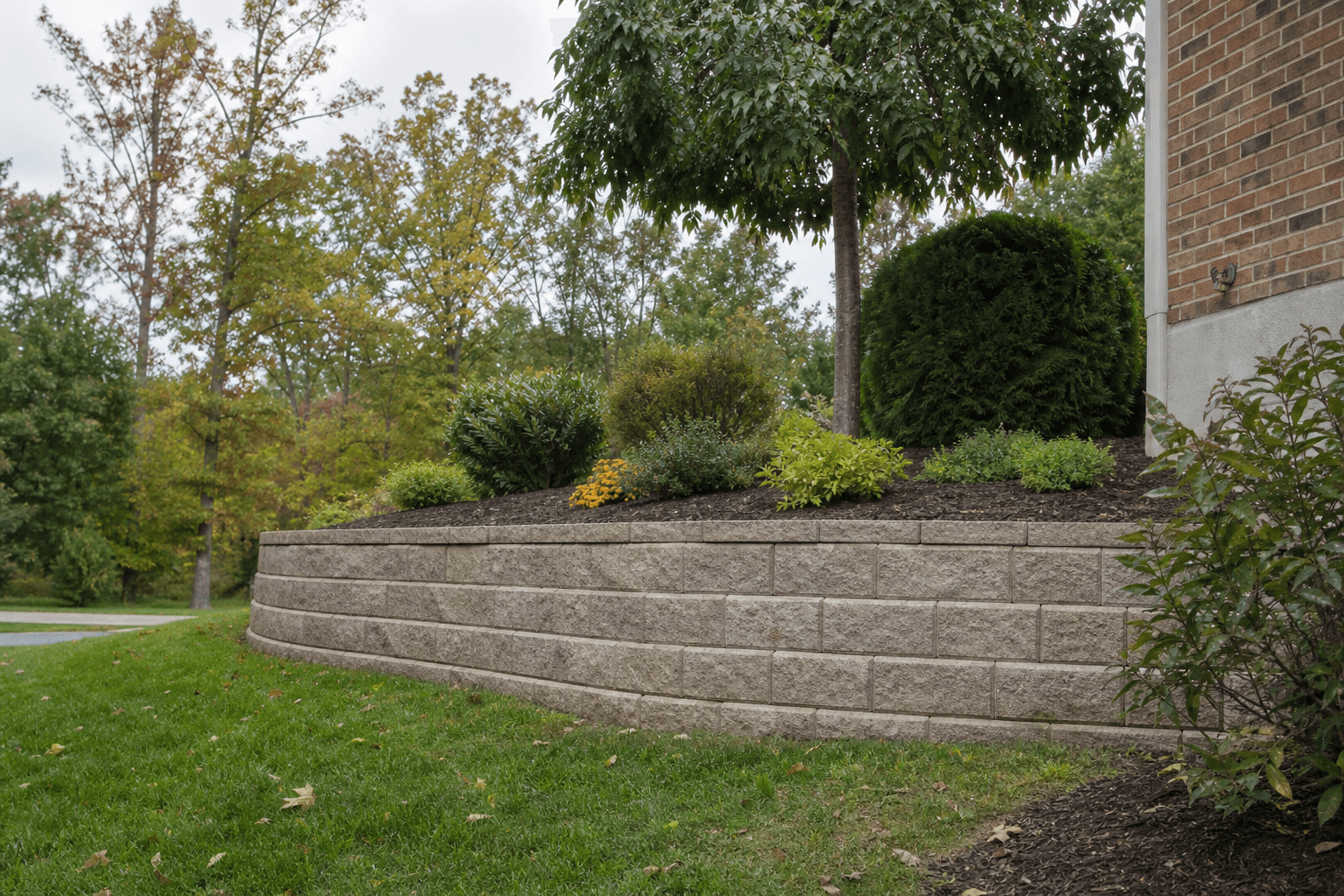
Manufactured concrete blocks offer a consistent appearance and can work well in planned curves or tiers when installed according to the system requirements. Natural stone has a less uniform look that may suit an existing garden or older property. Other wall systems may be appropriate for a particular site, but the right choice depends on the grade, loads, drainage, desired appearance, and maintenance expectations.
Look at the material in the context of the whole landscape. The wall cap, adjacent mulch or stone, planting choices, and transition to lawn or pavement all affect the finished result. CPM's landscape materials page provides a useful starting point for the surrounding beds, while its landscape design services can help connect the wall with the wider outdoor space.
Do not choose solely by the face of a block. Ask how the system will be supported, whether it calls for reinforcement, and what access is needed to bring material to the site. A material that looks simple on a display rack can involve substantial excavation and base preparation on a real slope.
Plan Drainage Before Installation
Water behind a wall adds pressure and can contribute to movement over time. Surface runoff also needs somewhere appropriate to go. A sound plan looks at the soil, backfill, drainage provisions, and what happens at the top and bottom of the slope. Those details should be settled before the visible wall goes in, not treated as a finishing touch.
For example, runoff from a downspout or paved area may cross the proposed wall location. Redirecting it without considering the neighboring property or the building foundation can create a new problem. If water already pools on the site, identify that condition during the initial review rather than assuming a new wall will fix it.
A wall should fit into an ongoing property maintenance plan. Keep drainage outlets clear where the selected design uses them, watch for erosion after heavy rain, and note any changes in alignment. This is especially important around walkways and other frequently used areas.
Know When to Call a Professional
A small decorative border on nearly level ground is different from a wall that holds back a steep bank. Get a professional assessment when the slope is significant, when a structure or driveway is close to the proposed wall, when water problems are already visible, or when failure could affect people or neighboring property. The same applies if the wall is settling, leaning, or bulging.
Permit and engineering requirements depend on the location and design. Check with the applicable local authority before construction; do not rely on a general height rule from an article. Locate buried utilities before digging and confirm boundaries if the work approaches a property line. A qualified professional can determine whether the site calls for an engineered design or additional specialist input.
If a tree is near the wall, consider roots, shade, and future growth in the plan. Removing major roots or piling soil around a trunk can harm a tree. Include nearby trees in the site review and consult CPM's tree maintenance information when the surrounding landscape needs attention too.
Questions to Bring to a Site Review
A useful estimate conversation starts with what the wall must do and how the property is used. Before requesting a proposal, take photos from the top and bottom of the slope and write down when you notice standing water or erosion. Explain whether people will walk near the wall or whether equipment will operate above it.
- What problem is this wall intended to solve, and is a wall the best option?
- How will the design handle water behind and around the wall?
- Which material options suit the site's grade and desired appearance?
- Will the work affect access, plantings, paving, or existing trees?
- Who will confirm local permit or engineering requirements for the proposed design?
- What should the owner inspect and maintain after installation?
Compare written scopes rather than a single headline figure. Make sure each proposal explains the excavation, base, drainage, wall material, grading, and site restoration it includes. A lower initial quote may describe a different scope, not the same wall for less money.
Plan the Wall With the Rest of the Landscape
Late September is a good time to document a slope while its planting beds and drainage paths are still easy to inspect. It does not mean every wall should be built immediately. The right schedule depends on site conditions, design work, and the contractor's availability. A thoughtful plan can include planting, bed materials, and future maintenance rather than treating the wall as an isolated structure.
If you are considering a retaining wall on a Wayne or Monroe County property, request a free estimate from CPM Property Services and describe the slope, drainage concerns, and intended use. You can also review CPM's testimonials before starting the conversation. An on-site discussion can establish a sensible scope without assuming a particular material or price in advance.
Monroe County: (585) 621-8488. Wayne County: (315) 904-4700.
CPM Property Services Team
Landscaping & snow management pros serving Monroe & Wayne county, NY.