Landscaping
Mulch or Stone for Rochester Landscape Beds? How to Choose
October 12, 2026 · By CPM Property Services Team
By October, a Rochester-area planting bed may show a season's worth of wear: thin mulch, scattered stones, leaves caught along the edge, or bare patches beside a walkway. Replacing the surface sounds simple until you have to decide between mulch and stone. The better choice depends on what is growing there, where water goes, and how you plan to care for the bed.
For homeowners in Monroe County and property managers in Wayne County, this is less about picking a color from a sample and more about giving each part of the landscape a useful job. Here is a practical way to compare the materials before ordering a bed refresh.
Start With the Bed, Not the Material
Walk the property after rain and in ordinary dry weather. Does water linger near a foundation or rush over a paved edge? Are the plants close together, or is this mostly an open strip alongside a walkway? A sunny entrance bed in Greece may need a different surface from a shaded planting beneath trees in Webster. The right answer can even change from one side of the same property to the other.
Note where leaves collect, where snow may be piled, and whether mowing or foot traffic pushes material out of place. Look at how the bed connects to turf, pavement, and downspouts. If the grade sends water toward a building, changing the surface material alone will not fix that drainage pattern. Bring these observations to a landscape design conversation before treating a decorative layer as a drainage solution.
When Mulch Fits a Planting Bed
Organic mulch is a useful surface around many trees, shrubs, and perennial plantings. It helps cover exposed soil and can moderate moisture changes while the material gradually breaks down. That breakdown is also why a mulched bed needs periodic attention: the layer thins, shifts, and may need to be topped up. Choose it because it suits the planting and maintenance plan, not because it promises a bed you never have to touch.
Leave space around trunks and plant stems instead of heaping material against bark or crowns. A deep mound against a tree is not better protection; it can hold moisture against the trunk and conceal problems. If an older bed already has a substantial layer, check its depth before adding more. Refresh what is worn rather than burying the existing surface every season. CPM's landscape materials page is a starting point for discussing the options that fit your site.
Mulch can work especially well when a bed is likely to change. If you expect to add plants, divide perennials, or adjust a design next spring, working in an organic bed is often simpler than moving a field of stone. Plan for leaves and windblown debris in fall; a tidy edge and regular cleanup still matter.
When Stone Makes Sense
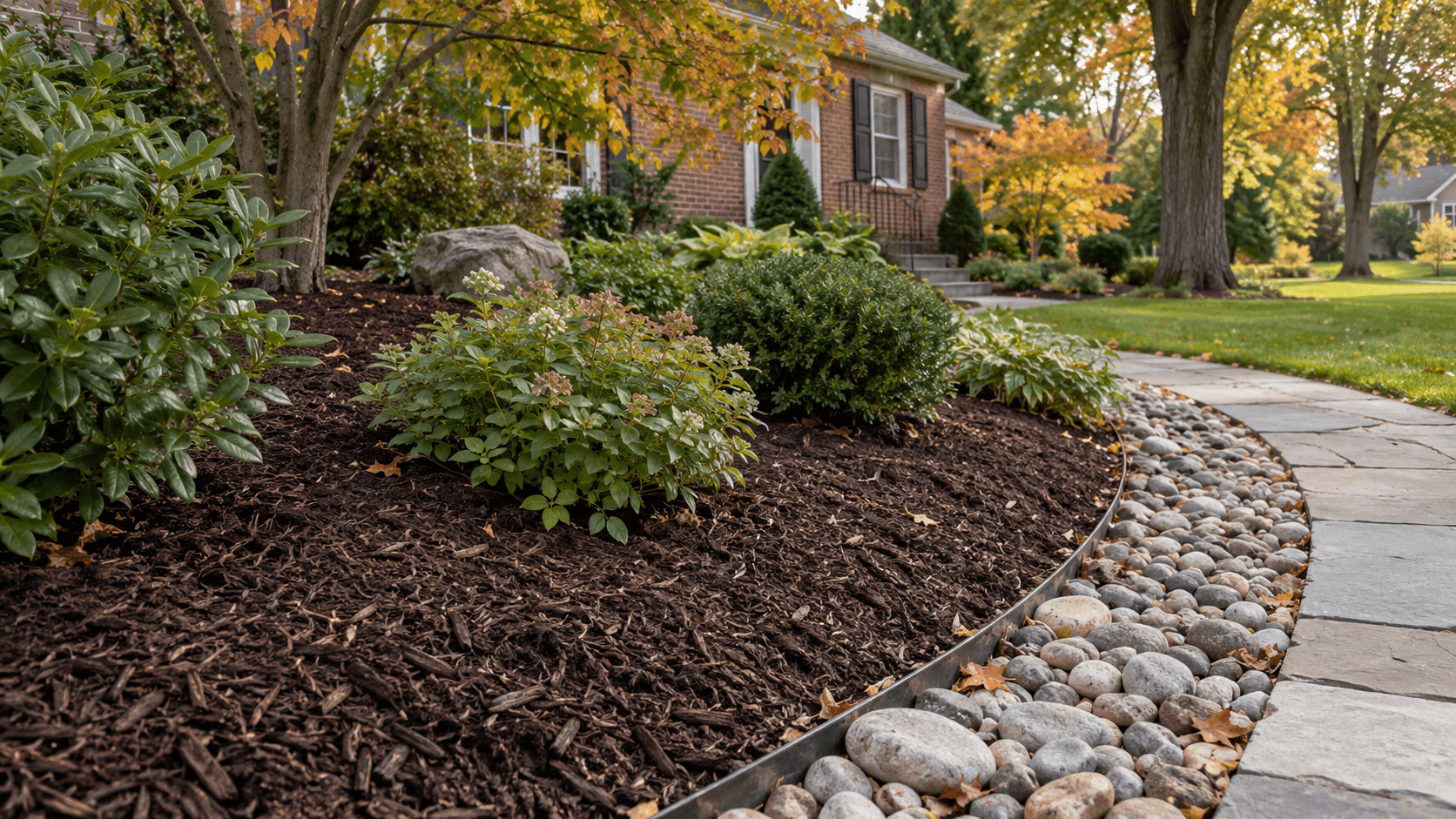
Stone does not decompose like bark mulch, which may make it attractive for a defined border or a low-planting area. It can also create a crisp transition along a walkway or around a feature where loose organic material tends to scatter. But stone is not a maintenance-free substitute for planting care. Leaves, soil, and weeds can still gather between pieces, and an uncontained edge can migrate into turf or paving.
Consider heat and plant exposure in a sunny bed. Stone can absorb and reflect warmth, so a surface that looks appealing beside paving may not be the best fit for every shrub or perennial. Think about the work required to move it if you later change plants or need to reach buried irrigation. Ask how edging will hold the stone in place and how crews will clear leaves without moving the surface. A landscaping plan should account for the living plants as well as the finish you see from the street.
Check Drainage and Bed Edges Before You Buy
Neither mulch nor decorative stone can correct a poor grade by itself. If water pools against the house, cuts a channel through a bed, or crosses a public walkway, find the source and a suitable path for runoff first. A stone border may make a wet spot look intentional while leaving the water problem untouched. Likewise, replacing washed-out mulch without addressing the flow means doing the same repair again.
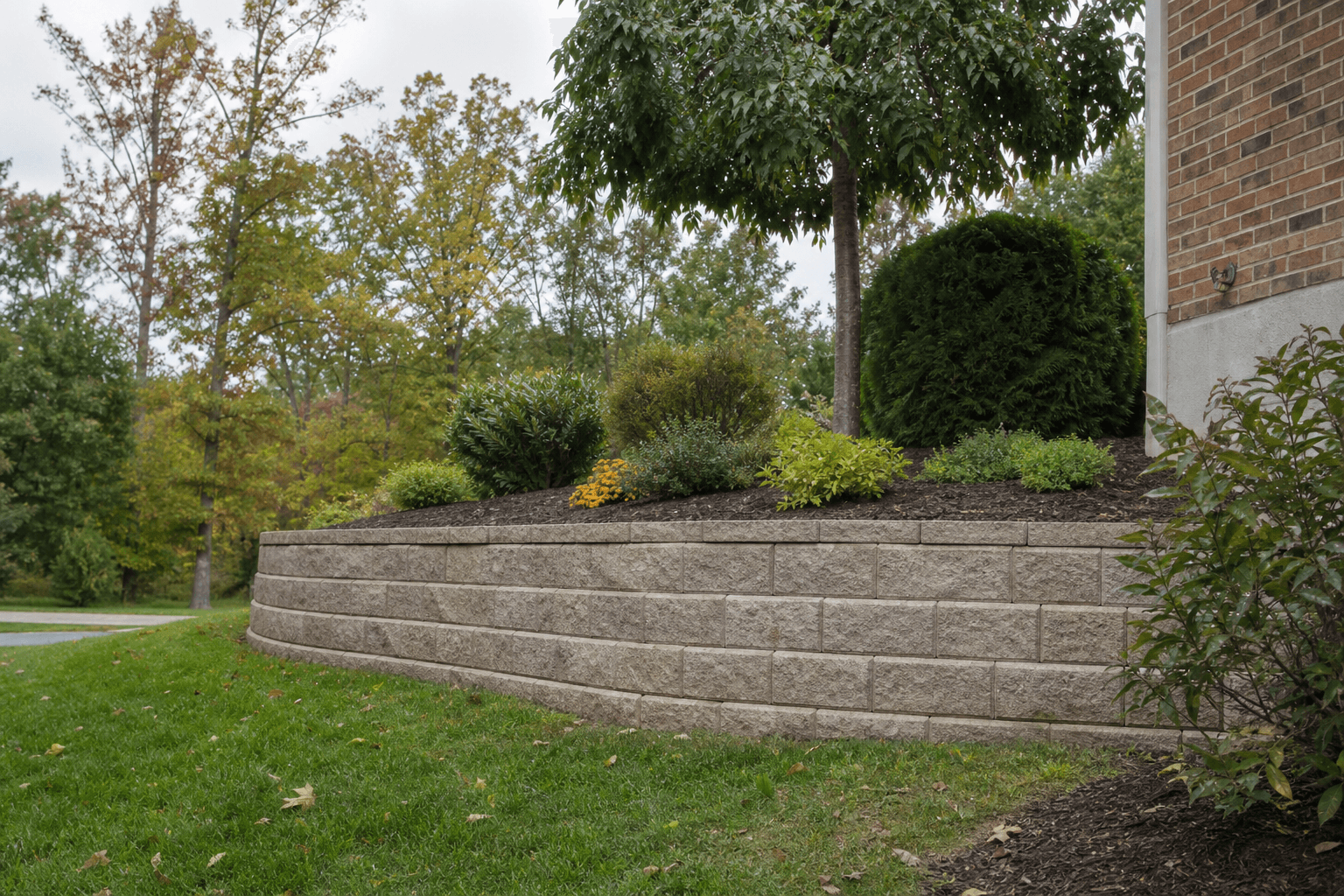
Follow the edge where planting meets lawn, pavement, or a retaining wall. A defined boundary makes routine mowing and cleanup easier, and it helps keep the chosen material where it belongs. For a sloped site, the bed may be only one piece of a larger grade and water discussion; CPM's retaining-wall information explains why drainage and surrounding conditions belong in the planning stage. Get a site-specific review when runoff threatens a structure or neighboring property.
Match the Choice to Your Maintenance Plan
Think past installation day. A mulched bed may need periodic replenishment and attention at its edges. A stone bed may need debris removal and occasional resetting where stones drift. Both need weeding, plant checks, and cleanup after seasonal weather. The better choice is the one your property team can actually maintain, not the one marketed as a one-time fix.
On commercial grounds in Rochester or Palmyra, crews also have to work around entries, customers, and snow-storage areas. Ask who will clear autumn leaves, how beds will be protected during winter service, and whether the material can be maintained alongside turf and pruning work. CPM's property maintenance services provide a framework for discussing recurring bed care rather than treating a refresh as an isolated purchase.
Make a Practical Choice for Each Area
You do not have to use one material everywhere. A planted bed can use mulch while a narrow, well-edged stone strip defines a nearby path. The point is to choose each surface for its location and upkeep, with an edge that makes the transition clear. Avoid covering a drainage concern with attractive material before understanding where the water goes.
- Identify the plants, shade, traffic, and seasonal debris in each bed.
- Trace runoff and check whether the grade needs attention before surface work.
- Decide who will replenish mulch or clear debris from stone over time.
- Confirm edging, access to irrigation, and the scope of any future planting changes.
For a fall refresh in Monroe or Wayne County, request a free estimate from CPM Property Services and describe your bed conditions, drainage questions, and desired look. You can review the testimonials page before reaching out. Monroe County: (585) 621-8488. Wayne County: (315) 904-4700.
CPM Property Services Team
Landscaping & snow management pros serving Monroe & Wayne county, NY.